Watermaker Membrane Problems in the Tropics: A Field Guide
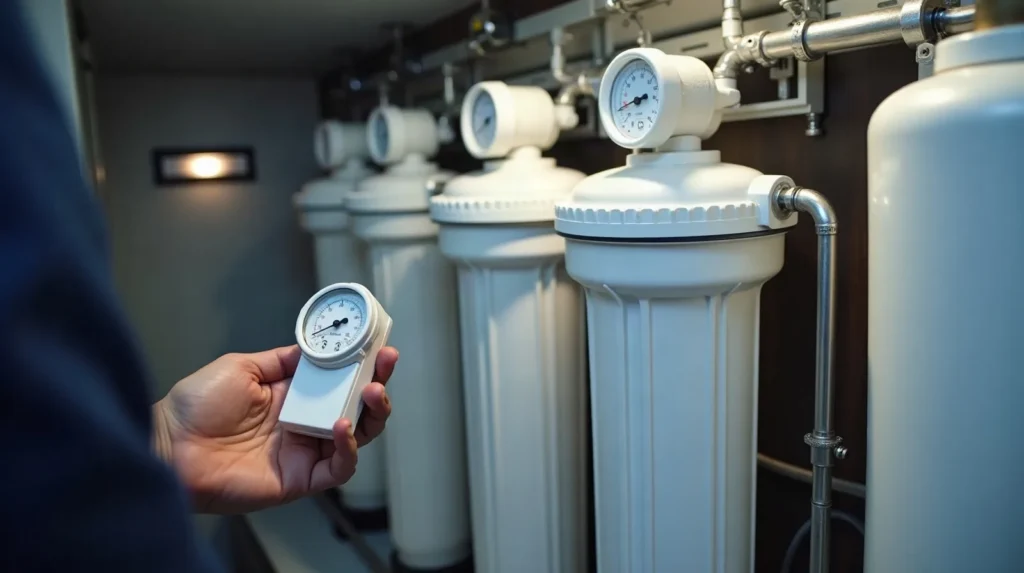
Most watermaker trouble in the tropics is not the membrane’s fault: low product flow, creeping salinity and pressure problems usually trace back to fouled prefilters, a tired feed pump, or biological growth from bad flushing habits — and the membrane merely takes the blame. This field guide separates the faults a crew can fix at anchor from genuine membrane death, and explains the flushing discipline that decides how long the expensive part lives.
How the system fails, in order of likelihood
A reverse-osmosis watermaker is a chain: seawater intake, strainer, prefilters, high-pressure pump, membrane, and controls. Faults cluster at the inexpensive end of the chain:
- Blocked prefilters — in plankton-rich water the 20-micron and 5-micron cartridges load in days, feed pressure to the HP pump drops, and product flow falls. Symptom: low pressure and low output together.
- Air leaks on the suction side — a perished O-ring or loose fitting lets air in, the HP pump cavitates, pressure hunts and output stutters.
- Feed or HP pump wear — worn valves and seals show as inability to reach working pressure even with clean filters.
- Biological fouling of the membrane — the tropical special. Left unflushed in 29°C water, the membrane becomes a culture flask; growth blocks the surface, output drops while salinity climbs.
- Genuine membrane failure — chemical damage (chlorine exposure is fatal), physical damage from pressure spikes, or simple age. Symptom: product salinity high and rising despite clean filters and correct pressure.
The ten-minute field diagnosis
With a pressure gauge, a TDS meter and a notebook, the split takes ten minutes. Record feed pressure, working pressure, product flow and product TDS, then compare against the machine’s commissioning numbers — which is why those numbers should be taped inside the locker door. Low pressure with low flow: look before the membrane (filters, suction air, feed pump). Correct pressure with low flow and rising TDS: the membrane surface is fouled or failing. Correct pressure and flow with high TDS only: suspect the product-side plumbing or a damaged O-ring letting feed water bypass into the product stream — a fault endlessly misdiagnosed as membrane death and fixed with a two-dollar seal.
Flushing: the habit that decides membrane life
In these waters the fresh-water flush is not optional maintenance; it is the difference between a membrane lasting years and lasting months. Every shutdown longer than a day wants a product-water flush to push biologically active seawater out of the element. Idle periods beyond a week or two want proper preservation with biocide solution per the manufacturer’s schedule. And the flush water must be unchlorinated — flushing from a dockside hose in port, through a carbon filter that expired last season, has quietly killed more membranes than age has. If the vessel lays up between charter seasons, membrane preservation belongs on the lay-up checklist alongside everything else in the tropical cooling-systems guide‘s off-season notes.
Cleaning versus replacing
A fouled membrane can often be recovered with alkaline and acid cleaning cycles — biological slime answers to the alkaline wash, mineral scale to the acid. Field cleaning is practical when the machine has a cleaning loop and the chemicals are aboard; results show immediately in restored flow and falling TDS. What cleaning cannot fix: chlorine damage, delaminated elements, or a membrane simply at the end of its life. Replacement is straightforward when the spare exists; the constraint out here is logistics, because membranes are a freight item to Sorong with real lead time, covered honestly in the guide to shipping marine spares into Sorong. The professional pattern for boats based in Raja Ampat: carry one spare membrane and a full set of seals aboard, and let the desk hold the reorder trigger.
Feed water habits that stack the odds
Where the machine runs matters almost as much as how it is maintained. Making water in a crowded anchorage, over a shallow sand bottom being stirred by the tide, or downstream of a river mouth loads the prefilters with exactly the silt and biology they exhaust fastest on. The economical habit on passage-making boats is deliberate: run the watermaker on open-water legs between sites, top the tanks there, and let it rest where the water is thick. Crews that adopt this one routine typically double their filter life and see steadier product quality, because the membrane spends its hours behind clean feed instead of fighting the anchorage.
When to call for service
The onboard-systems repair desk handles watermaker faults across the Raja Ampat operating area: remote triage from your gauge readings, field visits for pump overhauls and cleaning cycles, membrane replacement with water-quality testing afterwards, and pre-positioning of filters and seals so the next fault is a locker visit instead of a freight shipment. Send the four numbers — feed pressure, working pressure, product flow, product TDS — plus the machine model with your first message, and the desk can usually tell you before anyone travels whether you are buying a filter change, a seal kit, a cleaning cycle or a membrane.
WhatsApp: +6281139414563
Email: bd@juaraholding.com
Systems repair and coordination contracts are issued by PT Komodo Galangan Nusantara. All quotations are stated in USD.
Frequently asked questions
Why is my watermaker output dropping in tropical water?
Most often: prefilters loading fast in plankton-rich water, or biological fouling of the membrane from insufficient flushing. Check filters and compare pressure and flow against commissioning numbers before blaming the membrane.
How often should the membrane be flushed?
Fresh-water flush after every run when the machine will idle more than a day, and full biocide preservation for lay-ups beyond a week or two — always with unchlorinated water. Chlorine exposure destroys membranes permanently.
Can a fouled membrane be cleaned on board?
Yes, where the installation has a cleaning loop and the alkaline/acid chemicals are aboard. Biological fouling and scale both respond; chlorine damage and age do not, and those cases need replacement.
Should I carry a spare membrane in Raja Ampat?
For a vessel based here, yes — membranes are freight items with real lead time to Sorong. One spare element plus seal kits aboard converts a potential trip-stopper into a half-day job.