How It Works — From First Message to Handover
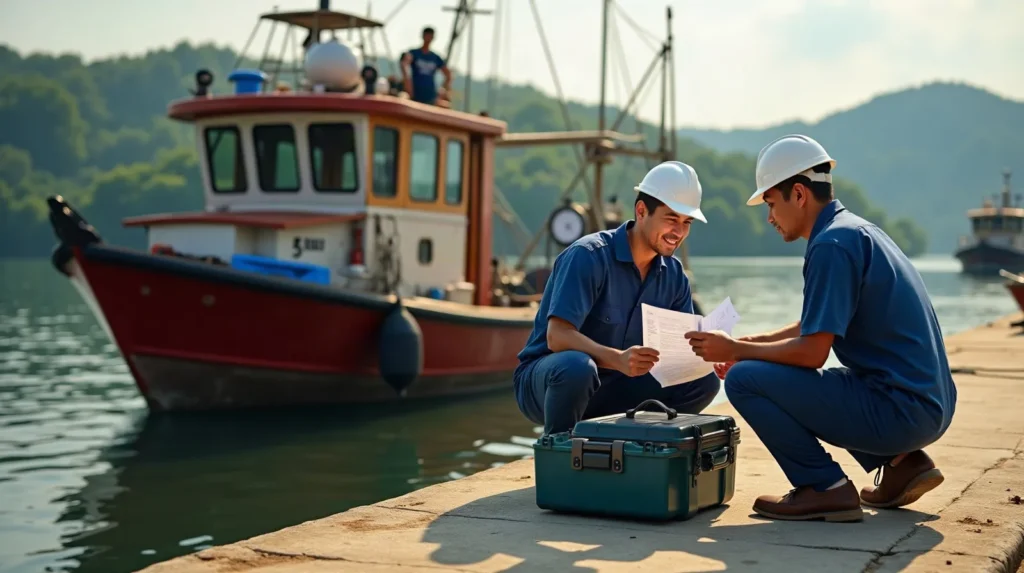
Every job we coordinate — a leaking gland at Misool, a season refit, a class docking — runs through
the same six steps: WhatsApp assessment, desk review, written scope and USD quotation, scheduling, execution with photographic
progress reporting, and a handover file you keep. The steps exist so that decisions are made on paper before money is
spent on movement, which in a region this remote is most of the discipline.
The six steps
1. WhatsApp assessment — what to send
Everything starts at +62 811 3941 4563. The first message that saves
the most time contains: vessel name and type, length overall, position, the problem as you understand it, photographs or a short
video, whether the vessel can move under her own power, and your deadline — the next charter, the survey due date, the season
opening. You do not need to diagnose the fault; you need to describe the symptom honestly. For anything with water coming in,
skip the composition and follow the emergency page instead.
2. Desk review and the repair-path decision
The desk’s first output is a decision, not an invoice: can this be repaired in the field where the vessel lies, does it need
bench work or a haul-out in Sorong, or is it honestly beyond what this
region can do — in which case we say so and help you plan the transit to a yard that can. That three-way honesty is the reason
this desk exists. We would rather lose a job than strand a vessel halfway through one.
3. Written scope and USD quotation
Before anyone mobilises you receive a written scope: the work, the parts and their sourcing path, who performs it, where,
the schedule, and the price in USD — government fees stated in IDR where that is what they factually are. The
cost guide explains the drivers behind the numbers. Variations
beyond the scope are agreed in writing before they are worked; that single rule prevents most of the disputes this industry is
famous for.
4. Scheduling: slot, parts, people
Three calendars have to agree — the facility slot, the parts arrival through the
logistics channel, and the specialists’ travel. The desk sequences them
so the vessel moves last: nothing is worse than a boat sitting on a slipway waiting for a part that has not landed. For planned
work we book against your season; for programme vessels under a
maintenance contract, most of this step already exists as the
service calendar.
5. Execution and progress you can see
Work in progress is documented as it happens: dated photographs, short reports at agreed intervals, and immediate escalation
when something under the paint changes the scope — with the variation priced before it proceeds. Owners overseas get the same
visibility as owners on the dock. Supervision is the product; the reporting is how you consume it.
6. Sea trial, acceptance and the handover file
Work ends with verification appropriate to the job — load test, pressure test, sea trial — and a handover file: what was
done, parts fitted with documents, measurements and test results, photographs, and recommendations with suggested dates. That
file feeds your maintenance history, shortens your next
survey, and defends the vessel’s value at sale.
Who signs, and who does the work
Contracts for repair, refit and coordination work are issued by PT Komodo Galangan Nusantara, the group
company under which this desk operates. The work itself is performed by the right hands for the job: our field engineers,
coordinated slipway and dock facilities in Sorong, specialist crews mobilised for timber, machining or electronics, and
independent surveyors where certification is involved. We are explicit about the roles because the industry often is not — the
coordinator, the facility and the surveyor are different parties, and you should know which is which on your job.
What we are not
Raja Ampat Shipyard is a repair-coordination and field-engineering desk for the Raja Ampat operating area, with heavy work
staged through Sorong facilities. We do not own a dry dock, and we do not claim one. What we hold is the working map of what
this region can actually do — which facility takes what dimensions, which specialists travel, what clears customs and how long
each of those honestly takes — and the discipline to run your job across it. Operators who want the marketing version of this
paragraph can find it elsewhere; the vessels that keep working out here run on the honest version.
Response expectations
The desk answers in English and Bahasa Indonesia. Routine enquiries get a considered reply, usually the same day; messages
flagged as emergencies are triaged first, day or night, and the
emergency page tells you exactly what to send so the first hour
is not wasted. If a question needs a facility or a specialist to answer, we say who we are asking and when to expect the
answer rather than going silent.
Start at step one
Send the first message — vessel, position, problem, photographs, deadline — to
+62 811 3941 4563 or by email to
bd@juaraholding.com; full details are on the
contact page. Six steps later you will have a repaired vessel and a file that proves it.
Frequently asked questions
What should my first WhatsApp message include?
Vessel name and type, length overall, position, the problem as you understand it, photographs or a short video, whether the vessel can move under her own power, and your deadline. Describe the symptom honestly rather than guessing the diagnosis — the template on the contact page can be copied directly.
Do I get a written scope and price before committing?
Yes, always. The written scope states the work, the parts and their sourcing path, who performs it, where, the schedule and the USD price — before anyone mobilises. Variations found during the work are priced and agreed in writing before they proceed. That single rule prevents most disputes in this industry.
Who actually performs the work?
The right hands for the job: our field engineers, coordinated slipway and dock facilities in Sorong, specialist crews mobilised for timber, machining or electronics, and independent surveyors where certification is involved. We are explicit about which party is which on your job, because coordinator, facility and surveyor are different roles.
What is in the handover file?
The work record, parts fitted with their documents, measurements and test results, photographs, and recommendations with suggested dates. It feeds your maintenance history, shortens the next survey and supports the vessel's value at sale — owners who keep these files consistently are the ones who sell well.
What if the job is beyond what this region can do?
We say so at step two and help you plan the transit to a yard that can handle it. The desk's value is the honest three-way call — field repair, Sorong work, or referral — made before money is spent on movement. We would rather lose a job than strand a vessel halfway through one.
New to this desk? Start with who runs the Raja Ampat Shipyard desk — the contracting entity, the group structure and the honest split between what happens in Sorong and what happens at anchor in Raja Ampat.