Haul-Out, Slipway & Dry Dock Access in Sorong and Raja Ampat
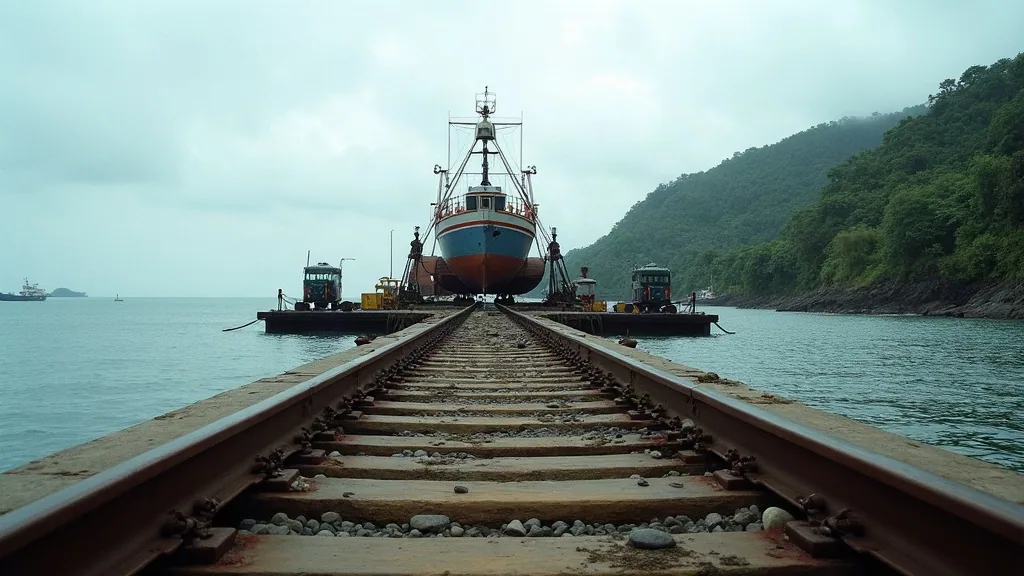
Vessels working Raja Ampat haul out in the Sorong area. There is no lifting facility inside the
regency capable of taking a commercial liveaboard, so every dry-work programme for the archipelago starts with a transit to the
mainland. We arrange the slipway or dock slot, confirm that your dimensions actually fit before you move, and run the
docking as a scheduled work period rather than an open-ended stay.
The three ways a vessel comes out here
Slipway (marine railway)
The workhorse of eastern Indonesia. The vessel is floated over a submerged cradle, centred and shored, and winched up an
inclined rail. It suits displacement hulls of moderate beam, and it is the normal route for steel liveaboards, wooden phinisi,
workboats and small cargo craft in this region. The constraints are cradle length, cradle width between the shoring, and the
draft over the cradle at the top of the tide — which is why tide planning is part of the booking, not an afterthought.
Dry dock
Where a dock is available it is more forgiving on beam and on hull form, and it allows work under the vessel with better
access and better weather protection. It is also in higher demand from the commercial and government fleet, which is what drives
the booking lead time rather than the price.
Crane or travel-lift out
Practical for tenders, speedboats, dive skiffs and light GRP craft up to the limits of the available lifting gear. Sling
positioning has to be planned against the vessel’s frames and running gear; we ask for a lifting plan or a general arrangement
drawing before anything is lifted.
Will your vessel fit?
Send these six numbers and we will confirm capability before you commit a transit:
- Length overall and length on the waterline
- Maximum beam, and beam at the turn of the bilge if the hull flares
- Maximum draft, loaded and light
- Displacement or a realistic light-ship figure
- Hull material and keel configuration — single keel, twin keel, catamaran, skeg-hung or spade rudder
- Any protruding gear: bow thruster tunnels, transducers, stabiliser fins, dive platforms
Multihulls need a specific answer rather than a general one. Catamaran haul-out in West Papua depends on the width between
the cradle shoring and on the availability of transverse beams to carry the hulls, and not every facility that accepts a 6 metre
beam monohull will accept an 8 metre beam catamaran. Ask before you sail. Hull-specific repair scopes are covered under
steel and fibreglass repair and
wooden and phinisi repair.
What a docking window looks like
| Stage | Typical duration | Notes |
|---|---|---|
| Arrival, survey of the underwater body, lift | 1 day | Tide-dependent on a slipway |
| High-pressure wash and initial inspection | 1 day | Defect list is finalised here, not before |
| Preparation — blasting, sanding, opening up | 2–7 days | Drives everything downstream |
| Structural, machinery and running-gear work | 2 days – 4 weeks | Scope dependent |
| Coating system application and cure | 3–7 days | Humidity and rain control this |
| Survey attendance, launch, sea trial | 1–2 days | Class attendance is booked in advance |
A routine annual docking for a liveaboard — wash, anodes, minor plating or seam work, antifouling, propeller and shaft check —
usually occupies seven to twelve days. Anything involving significant steel renewal, osmosis treatment or a full blast back to
bare substrate should be planned at three to six weeks. The coating and drying times, not the trades, set the floor.
Booking, lead time and season
The Raja Ampat liveaboard fleet largely shares one calendar, which means it also shares one maintenance window. The heavy
booking pressure falls either side of the main dive season, and slipway capacity in Sorong is finite. Practical lead times:
- Routine docking, flexible dates: six to eight weeks.
- Survey docking with class attendance: three months, because the surveyor’s diary is the binding
constraint. - Emergency lift after damage or grounding: handled case by case — see
emergency and on-site repair.
Booking without a scope is how dockings overrun. We would rather spend a week agreeing the work list than have the vessel
sitting on the cradle while somebody decides what to do with it. Costs and the way docking fees, lay days and labour are built
into a budget are explained on the shipyard costs and refit
budgeting page.
Getting the vessel to Sorong
From Waisai the transit is a few hours; from Misool or the southern sites, allow a full day and plan the weather. If the
vessel is not confidently able to make the passage under its own power, that decision belongs before the booking, not on the
day. We would rather reschedule a slot than have a vessel with a failing gearbox trying to cross open water to keep an
appointment.
While the vessel is on the hard
Ashore is the only sensible time to do half a dozen jobs that are painful afloat: shaft withdrawal and bearing renewal,
rudder bearing clearances, sea-valve overhaul, tank internal inspection, hull thickness readings, and any below-waterline
transducer or through-hull renewal. Bundling those into the same lift is usually the single largest saving available to a
Raja Ampat operator, and it is planned into the work list at scoping stage. Machinery scopes run through
engine and running-gear repair; class items are prepared with the
survey coordination desk.
Stern gear while she is out
The underwater work you cannot do afloat is the work to schedule the moment a docking is confirmed: cutless bearings, stern seals, shaft measurement and rudder checks all belong in the same window as the coatings. The full scope — and how to decide what can wait for the next docking — is set out under propeller, shaft and stern gear repair; tell the desk your symptoms when you book and one work period covers both.
Talk to the repair desk
Send the vessel particulars — length overall, beam, draft, hull material, displacement, current location and the window you have available — and the Raja Ampat Shipyard Desk will come back with a written scope and a quotation in USD for haul-out and docking. Quotations name the yard, the slipway or dock, the work sequence and the assumptions behind every line.
WhatsApp: +6281139414563
Email: bd@juaraholding.com
Contracts for construction, repair, refit and vessel-sale work are issued by PT Komodo Galangan Nusantara. All quotations are stated in USD.
Further reading from the field notes
- Slipway, Travel Lift or Beach Grid: Haul-Out Methods Explained
- Pre-Docking Checklist: What to Prepare Before a Sorong Haul-Out
- Is There a Shipyard in Raja Ampat That Can Handle Liveaboards?
- Where to Haul Out in Sorong
Frequently asked questions
Is there a dry dock in Raja Ampat?
No. Raja Ampat has anchorages, fuel and light repair capability, but no lifting facility for commercial liveaboards. Haul-out for the Raja Ampat fleet is done in the Sorong area on the mainland, which is a short transit from Waisai.
Can catamarans haul out in West Papua?
Sometimes, and it depends entirely on beam and on the cradle arrangement available at the time. Send LOA, beam, draft and displacement and we will confirm against current facility limits before you plan a transit. A wide catamaran that fits nowhere locally is better routed to a larger yard than turned away on arrival.
How much notice do I need to book a haul-out?
Six to eight weeks for routine work with flexible dates, and around three months if a class surveyor has to attend. Shoulder-season slots either side of the dive season go first because the whole fleet wants the same weeks.
What determines how long my vessel stays on the hard?
Surface preparation and coating cure, in almost every case. Welding and mechanical work can be resourced with more people; paint cannot be rushed in tropical humidity. That is why the work list is agreed before the lift rather than discovered after it.