Propeller, Shaft & Stern Gear Repair — Sorong
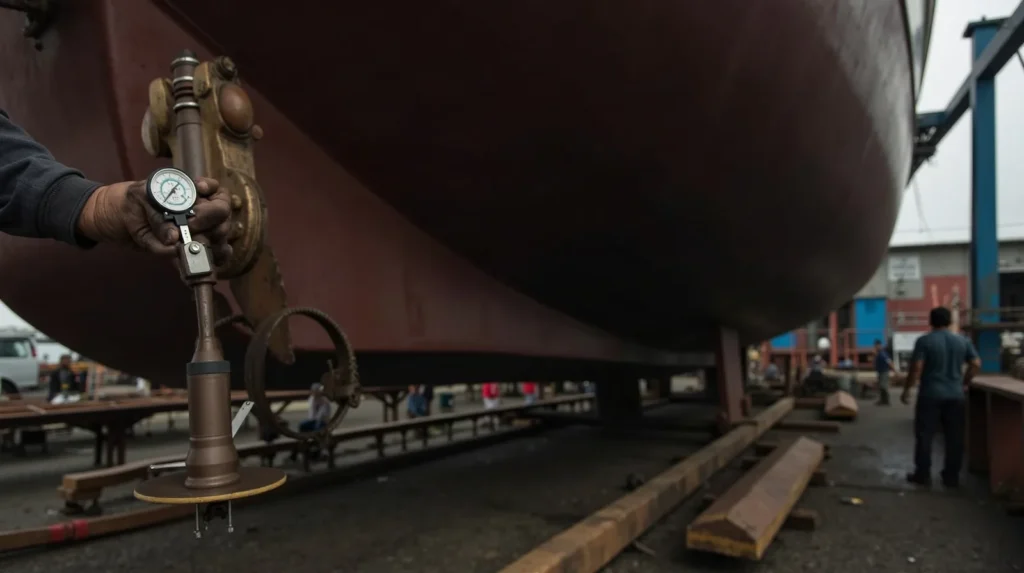
Vibration, a leaking stern gland or a damaged propeller are stern-gear problems, and stern gear is
repaired in two places: in the water by divers, for clearance and inspection and temporary measures, and on the hard in Sorong,
for everything that involves withdrawing a shaft or removing a propeller properly. We coordinate both — diver tasks at
anchor across the Raja Ampat operating area, and shaft, bearing, seal and rudder work scheduled into a
Sorong docking window.
What can wait, and what cannot
Owners usually meet stern-gear trouble as a symptom, not a diagnosis. The honest triage looks like this:
| Symptom | Likely story | Urgency |
|---|---|---|
| Sudden vibration after a touch or a line strike | Fouled or damaged propeller, possibly a bent blade or shaft | Diver check now; reduce revs until inspected |
| Gradually increasing vibration over weeks | Wearing cutless bearing, growth on the blades, or slow misalignment | Schedule; diver check confirms which |
| Stern gland dripping faster than before | Packing or seal wear; normal in slow motion | Monitor and adjust; plan work at next docking |
| Stern gland streaming, not dripping | Failed seal or displaced packing | Urgent — see the emergency page |
| Steering feels loose or notchy | Rudder bearing wear or coupling backlash | Diver inspection, then a docking decision |
A thirty-minute diver inspection with photographs settles most of these questions for a fraction of the cost of guessing,
and it is the first thing we arrange when the symptom is ambiguous.
In-water work by divers
Qualified divers working from the vessel or from a support skiff handle the tasks that do not need the vessel out of the
water: cutting away rope and net from a fouled propeller, clearing growth from blades and apertures, photographing bearing
clearances and gland condition, changing shaft and hull anodes, and fitting temporary measures after a grounding so the vessel
can reach Sorong under her own power. In marine-park waters we keep this work tidy — debris recovered, nothing abandoned on the
bottom.
What divers cannot honestly do is permanent mechanical repair. A diver can confirm that a cutless bearing has failed; the
bearing is replaced on the hard. We say so plainly because the alternative — an operator nursing a known-bad bearing through a
season because someone implied it was fixed — costs far more when the shaft finally scores.
On the hard: shaft, bearings, seals
Shaft work belongs in a planned docking. The scope we coordinate in Sorong covers shaft withdrawal and inspection, runout
measurement, cutless bearing replacement, stern gland repacking or mechanical-seal replacement, and re-installation with
alignment checked against the engine — because a “shaft problem” that returns after every docking is very often an engine-mount
problem wearing a bearing from the other end. Where couplings are opened we check them properly rather than bolting blind.
Alignment is measured, not felt. On vessels that have grounded, we combine the stern-gear scope with the hull and structure
checks described under steel and fibreglass repair, since a shaft that
went out of line usually had help.
Propellers: repair, rebalance or replace
A damaged bronze propeller is not automatically scrap. Bent blades within repairable limits can be trued and rebalanced;
edge damage can be dressed; and the economics of repair versus replacement depend mostly on freight, since a propeller is heavy,
awkward and slow to import. We give the honest comparison per case: repair path with its turnaround, replacement path with its
sourcing lead time through the parts logistics channel, in USD, and the
operator picks with real numbers in front of them. Pitch adjustment and speed-coating applications are handled the same way —
quoted against the actual wheel, not a brochure.
Rudders and steering couplings
Rudder bearing wear, loose pintles on transom-hung rudders, corroded stocks and worn steering couplings all show up in this
fleet, particularly on hard-worked dive boats. On the hard we drop or support the rudder as the design requires, measure the
wear, and repair or re-bush accordingly. Hydraulic steering faults upstream of the quadrant — pumps, hoses, rams — are covered
under onboard systems repair; the two scopes are often done
together so the vessel leaves the dock with the whole steering chain verified.
Pair it with a docking you already need
Almost every job on this page shares a truth: the expensive part is getting the vessel out of the water, and that cost is
already sunk when you dock for antifouling or survey. The least expensive stern-gear work is the work bundled into a docking that was
happening anyway — bearing and seal renewal alongside coatings, shaft measurement alongside
survey attendance. Tell the desk what symptoms you have
and when your next docking is due, and we will build one scope instead of two. Costing follows the drivers explained in the
cost guide; to start, send vessel, symptom and position via the
contact page or WhatsApp +62 811 3941 4563.
Further reading from the field notes
Frequently asked questions
Can a bent propeller be repaired in Indonesia or must it be replaced?
Bent blades within repairable limits can be trued and rebalanced, and edge damage dressed, so repair is a genuine path for common bronze wheels. The decision is usually economic: propellers are heavy, slow freight, so we price the repair turnaround against the replacement lead time and let you choose with real USD numbers.
Is shaft alignment available in Sorong?
Yes, during a docking. Alignment is measured with the shaft line opened up, and checked against the engine mounts — recurring shaft problems are very often engine-mount problems wearing the bearing from the other end. We combine the check with cutless bearing and seal renewal in the same work period.
My stern gland drips more than before. How urgent is it?
A faster drip is wear announcing itself: monitor the rate, adjust if the gland allows, and plan proper attention at the next docking. Streaming rather than dripping is different — that is a failed seal and an urgent response. The distinction, and what to send us, is on the emergency page.
Can divers clear a fouled propeller or change anodes in Raja Ampat?
Yes — rope and net clearance, growth removal, anode changes and photographic inspection of bearings and glands are routine diver tasks at anchor across the operating area. What divers cannot honestly do is permanent mechanical repair; anything needing a shaft withdrawn happens on the hard in Sorong.
Can stern-gear work share a docking with antifouling and survey?
It should. The expensive part of stern-gear work is having the vessel out of the water, and that cost is already sunk when you dock for coatings or class. Bundling bearings, seals and shaft measurement into a docking that was happening anyway is the least expensive pattern there is.