Dive Liveaboard Systems, Compressor & Nitrox Service in Sorong
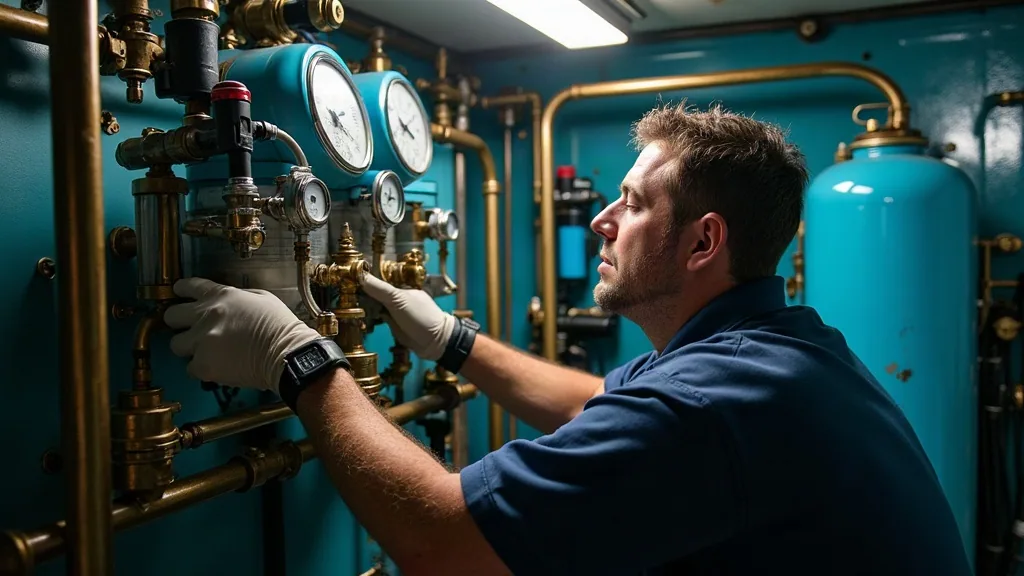
On a Raja Ampat dive liveaboard, the compressor room decides whether the trip runs. A main
engine can limp; a failed breathing-air compressor with no redundancy ends the charter that morning. We service compressors,
nitrox systems, high-pressure plumbing and dive-deck arrangements for vessels based around Sorong and working the archipelago.
Breathing-air compressors
- Scheduled service to running hours: valve service, ring and bearing renewal, intercooler and separator
cleaning, safety-valve verification and drive alignment. - Filtration management — cartridge change intervals calculated against actual running hours and ambient
humidity, not against the calendar. Raja Ampat’s humidity load is severe and cartridges reach saturation far earlier than
temperate-climate schedules suggest. - Air intake arrangement — the single most frequently mishandled item on this fleet. An intake drawing
exhaust from a generator, a tender outboard or a galley extractor is a carbon-monoxide incident waiting for the wrong wind
angle. We survey intake position, prevailing airflow and relocation options. - Gas quality testing — sampling for moisture, oil, carbon dioxide and carbon monoxide, with the result
recorded and dated. It is the only objective evidence an operator has that the air was fit to breathe on a given date. - Redundancy planning — a second compressor, or an agreed contingency, sized to the vessel’s guest load. For
a vessel running twelve-week seasons far from support, this is a commercial decision, not a technical luxury.
Nitrox systems
Membrane and continuous-blending systems are serviced as a whole: feed air quality and pre-filtration, membrane condition and
flow, oxygen analysis and calibration of the analysers, correct oxygen-clean practice on anything downstream of enrichment, and
labelling and blending records. Oxygen-service cleanliness is not a preference — a compatible lubricant on a fitting that has
gone from air to enriched service is a real ignition risk, and it is exactly the sort of undocumented change that occurs when a
system is worked on by whoever was available in a port.
High-pressure plumbing, cylinders and deck arrangements
- HP pipework and hose renewal to correct pressure ratings, with proper support and restraint rather than cable ties
- Filling panel rebuild, gauge calibration, whip and valve renewal
- Cylinder inspection scheduling, valve service and rack design so that cylinders are secured against a beam sea
- Dive deck layout: gearing-up benches, camera tables with dedicated fresh-water rinse and secure charging, ladder and
platform strength and non-slip surfaces - Tender and RIB davits, lifting points, outboard service and towing arrangements
- Emergency oxygen provision, first-aid oxygen delivery, and secure stowage on the dive deck
Charging arrangements for torches, scooters and camera batteries sit with the
electrical desk, because on more than one vessel we have
found a lithium charging bench improvised on an unfused circuit next to a fuel locker.
Safety and compliance items
Dive liveaboards operating in Indonesia carry both vessel-safety obligations and operational ones. We prepare and verify the
things a surveyor or a serious charter client will look at: lifejacket and liferaft quantity, condition and service dates;
firefighting arrangement in the compressor room and engine space; bilge and general alarms; muster and abandon-ship
arrangements; and communications redundancy for a fleet that regularly works out of mobile coverage. Where formal survey is
involved, it runs through the survey coordination desk.
We prepare vessels for inspection; we do not issue certificates and we do not claim approvals we do not hold.
Scheduling around the dive season
Compressor and dive-system work is mostly achievable afloat, which means a lot of it can be done at anchorage between
charters rather than during a lift. What must be aligned with a
docking is anything structural on the dive platform, ladder mountings,
transducer work or hull penetrations for HP lines. For operators running a full Raja Ampat season, the sensible pattern is a
compressor and gas-quality service before the season starts, a mid-season check, and the structural items folded into the annual
docking. A season-long maintenance plan of that kind is built under
refit and maintenance management.
Consumables, spares and the season plan
Dive systems consume their way through a season: filter stacks, felt pads and molecular sieve, O2 sensors with fixed service lives, O-rings and valve kits, compressor oil of the correct grade. None of it is available in Waisai, and a compressor down for want of a filter cartridge is a wholly avoidable way to lose a week of guest diving. Before the season we agree a consumption plan against your logged running hours and stage the stock in Sorong through the marine spares logistics channel, so a field visit travels with the consumables instead of waiting for them.
Operators running more than one vessel put this on a calendar: compressor service intervals, air-quality tests and cylinder test batches planned for the year, with visits falling on turnaround days. That is a preventive maintenance programme, and dive fleets are the operators it pays back fastest — the machinery that keeps guests breathing is the machinery least suited to breakdown maintenance.
Talk to the repair desk
Send the vessel particulars — length overall, beam, draft, hull material, displacement, current location and the window you have available — and the Raja Ampat Shipyard Desk will come back with a written scope and a quotation in USD for dive systems, compressor and nitrox work. Quotations name the yard, the slipway or dock, the work sequence and the assumptions behind every line.
WhatsApp: +6281139414563
Email: bd@juaraholding.com
Contracts for construction, repair, refit and vessel-sale work are issued by PT Komodo Galangan Nusantara. All quotations are stated in USD.
Further reading from the field notes
- Dive Compressor Air Purity: Testing Standards & Service Intervals
- Safety Equipment Checklist for Dive Boats in Eastern Indonesia
Frequently asked questions
How often should a liveaboard compressor be serviced?
To running hours rather than to the calendar, and with filtration intervals shortened for tropical humidity. For a vessel running back-to-back Raja Ampat charters that usually means a full service before the season, a mid-season inspection, and filter changes well inside the manufacturer’s temperate-climate interval.
Can you test breathing air quality in Sorong?
Yes. We take samples for moisture, oil, carbon dioxide and carbon monoxide and record the result with the date and the compressor running hours. That record is the only objective evidence an operator has of gas quality on a given trip.
Can nitrox membrane systems be serviced locally?
Membrane and blending systems are serviced on site, including analyser calibration and oxygen-clean practice downstream of enrichment. Membrane replacement itself depends on parts lead time from Jakarta or Singapore, so it is planned rather than reacted to.
Do you certify dive vessels?
No. We prepare vessels for inspection and coordinate attendance by the appropriate surveyor or authority, and we document the work we carry out. We do not issue certificates or claim approvals that we do not hold.