Shaft Vibration Diagnosis on Liveaboards: From Symptom to Fix
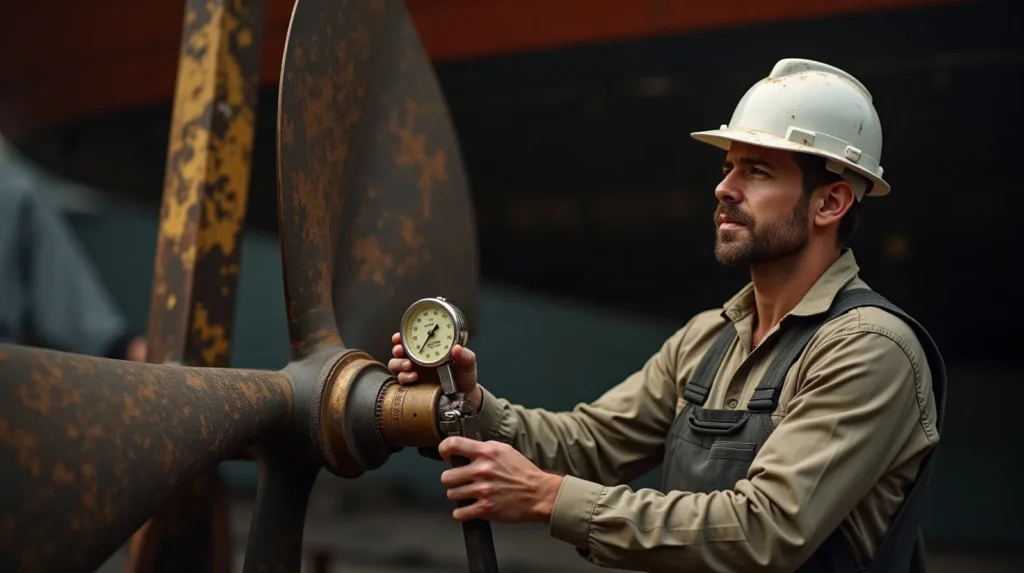
Shaft vibration on a liveaboard has five usual suspects — a fouled or damaged propeller, a bent shaft, worn cutless bearings, misalignment between engine and shaft, and failing engine mounts — and the pattern of the vibration usually points to the culprit before any equipment is unbolted. This guide walks the diagnosis in the order that costs least: observation first, in-water checks second, and haul-out only when the evidence demands it.
Read the vibration before touching anything
Vibration carries information. Log these observations over a normal day’s running and half the diagnosis is done:
- Speed dependence — vibration that grows steadily with shaft RPM points at rotating equipment: propeller, shaft, coupling. Vibration worst at one narrow band and calmer above it suggests resonance or mounts.
- Load dependence — worse under hard load than at the same revs lightly loaded points toward propeller damage or drivetrain strain rather than simple imbalance.
- Onset — sudden onset after a specific event (a line over the side, a touch on coral, a hard manoeuvre) is damage. Gradual onset over months is wear — bearings, mounts, or growth on the blades.
- Where it is felt — strongest at the stern gland and aft cabin floors points down the shaft line; strongest at the engine points at mounts or coupling.
One more five-minute check with the engine stopped and cooled: grasp the shaft at the gland and try to lift it. Perceptible movement means bearing clearance, and the diagnosis has probably announced itself.
The inexpensive causes first: fouling and rope
The most common cause of new vibration in these waters is also the least expensive: something on the propeller. A collar of net or line, a colony of barnacles on one blade, or mud packed in a folding mechanism unbalances a propeller instantly. A diver with a scraper and a camera resolves this in twenty minutes at anchor, which is why a hull-and-prop inspection is always the first mobilisation, never the last. The same dive checks anode condition on the shaft, visible play at the strut bearing, and whether the propeller shows the bright scars of recent contact.
Interpreting the harder cases
- Cutless bearing wear — water-lubricated rubber bearings in the strut and stern tube wear oval with age, sand and slow-speed running. Symptoms: rumble and lateral shake that grows over months, measurable lift at the gland. Replacement needs the shaft drawn or the hull out.
- Bent shaft — usually after contact. A dial-gauge run-out check at the gland tells the truth afloat; anything beyond a few thousandths of an inch at the coupling deserves proper measurement ashore.
- Misalignment — engine-to-shaft alignment drifts as mounts age and hulls work. Classic tell: vibration accompanied by a stern gland that runs hot or weeps unevenly, and coupling faces that show uneven witness marks when broken.
- Engine mounts — collapsed or oil-softened mounts let the engine dance, which masquerades as shaft vibration. Inspect visually: cracked rubber, sagged height, oil pooling on the mount base.
- Propeller damage — a nicked or slightly bent blade may look trivial and still shake a boat badly at cruise revs. Balancing and repair is workshop work, but diagnosis is a diver’s photograph.
Why vibration is never just a comfort problem
A shaking drivetrain is spending its energy destroying itself. Vibration accelerates cutless bearing wear, works the stern gland until it weeps, fatigues coupling bolts and engine mounts, and loosens every hose clamp and electrical connection within reach of the resonance. The cost curve is steep: the same root cause fixed early is a diver visit or a mount change, and fixed late is a drawn shaft, a machined coupling and a docking. Treating new vibration as a scheduled repair item — rather than a noise the crew learns to live with — is the least expensive drivetrain policy a vessel can hold.
What can be fixed afloat, honestly
At anchor in Raja Ampat: propeller cleaning and foreign-object removal, engine mount replacement where access allows, coupling checks, gland adjustment and run-out measurement. On a tidal grid or in a short haul window: propeller removal for repair, visible shaft inspection, and strut bearing replacement on some configurations. Needing a full docking: drawing the shaft for straightening or replacement, stern tube bearing work, and any repair that pairs with structural inspection after a strike. Parallel drivetrain symptoms — oil in the gearbox coupling area, temperature changes, shifting problems — belong to the engine side and are covered in the fuel and engine troubleshooting guide and its companions.
Getting it measured and fixed from here
The shaft and propeller repair desk for the Sorong region runs exactly this sequence: remote triage from your vibration log, a diver inspection at anchor where warranted, run-out measurement afloat, and — only when the evidence says so — a docking plan that bundles shaft work with whatever else the hull is due. Costs are stated in USD and driven by mobilisation distance and what the measurements find; the cost-shaping logic is the same one described in the repair budgeting guide for West Papua. Send the observation log and any diver photographs with your first message — vibration described well is vibration half-diagnosed.
WhatsApp: +6281139414563
Email: bd@juaraholding.com
Repair and coordination contracts are issued by PT Komodo Galangan Nusantara. All quotations are stated in USD.
Frequently asked questions
Why does my boat vibrate more after touching a reef?
Even light contact can nick or bend a propeller blade or spring the shaft slightly. A diver inspection with photographs is the first step; a dial-gauge run-out check at the gland tells whether the shaft itself is involved.
Can a cutless bearing be replaced without hauling out?
On most configurations, no — the shaft must be drawn or the stern gear exposed. Some strut bearings can be changed in a short tidal-grid window; the desk confirms which case applies from your stern gear arrangement.
How much shaft movement at the gland is too much?
Any movement you can clearly feel by hand indicates bearing clearance worth measuring. The formal limits depend on shaft diameter and bearing type, which is exactly what a measurement visit establishes.
Is new vibration ever just fouling?
Frequently — barnacle growth or a collar of fishing line on one blade is the most common cause found here, and a twenty-minute diver visit resolves it. That is why in-water inspection always precedes mechanical investigation.