Onboard Systems Repair — Watermaker, AC, Refrigeration & Hydraulics
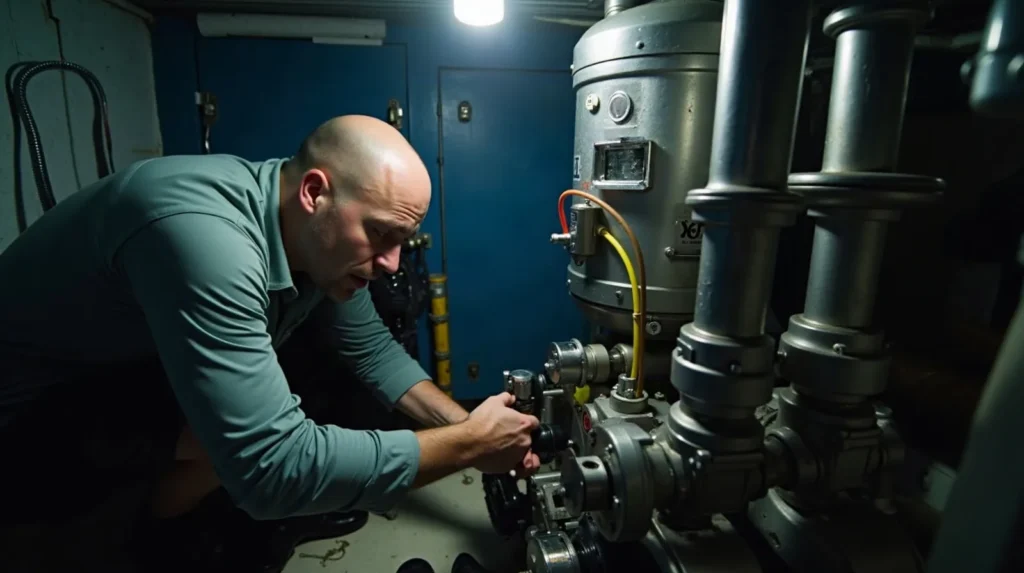
Watermakers, air-conditioning, refrigeration and hydraulics are the systems that decide whether a
Raja Ampat charter continues or turns back. We repair them where the vessel is: field visits by engineer from Sorong staging for
faults that can be fixed aboard, bench work in Sorong for pumps and compressors that cannot, and a parts channel for everything
that needs a spare first. Send the symptom and the make and model to
+62 811 3941 4563 and we will tell you honestly which of the three it is.
Which faults are field-repairable — and which need parts first
The distinction matters more here than almost anywhere else, because a part that is an hour away in Singapore is a week away
at an anchorage off Waigeo. Before anyone travels, we triage on WhatsApp: photographs of the unit, the data plate, the fault as
the crew sees it, and a short video if the fault makes a noise. Roughly speaking, the split runs like this:
| System | Usually repairable aboard | Usually needs parts or bench work |
|---|---|---|
| Watermaker | Pre-filter blockage, low-pressure pump priming, leaks on fittings, pressure-relief adjustment | Membrane replacement, high-pressure pump rebuild, failed pressure vessels |
| Air-conditioning | Fouled seawater strainers and loops, failed circulation pumps (if a spare is aboard), control faults | Compressor replacement, gas leaks needing recovery and recharge, corroded condenser coils |
| Refrigeration | Thermostat and control faults, condenser cleaning, door-seal repairs | Compressor and evaporator replacement, re-gassing sealed systems |
| Hydraulics & steering | Hose replacement (with stock or fabricated hose), bleeding, seal kits on accessible cylinders | Pump and valve-block overhaul, machined components, ram re-chroming |
That table is a planning guide, not a promise. The honest version of every answer depends on what spares are aboard, what can
be fabricated in Sorong, and what has to fly in through the
marine spares logistics channel.
Watermakers
Nothing shortens a charter faster than a dead watermaker with sixteen guests aboard. The common failure pattern in these
waters is predictable: heavy biological load clogs pre-filters faster than temperate-water service intervals assume, the crew
stretches the interval anyway, and the membrane pays for it. When we service a unit we look at the whole chain — feed pump,
pre-filtration, high-pressure pump, membrane condition, and the flush arrangement — rather than swapping the loudest component.
Membrane replacement at anchor is routine if the membrane is there. Membranes are long, fragile and awkward freight,
which is exactly why fleets on a
planned maintenance programme keep one pre-positioned in Sorong
rather than discovering the lead time mid-season. After any membrane or pump work we test product water quality with a
calibrated TDS check before the crew serves it to guests, and we log the figures in the handover note.
Air-conditioning and refrigeration in tropical duty
Marine AC in Raja Ampat fails for one dominant reason: the seawater side. Growth rates in these waters are among the highest
a cooling loop will ever see, and a loop that ran clean for years in the Mediterranean will foul here in months. Most “compressor
failures” we attend turn out to be starved condensers — strainers, hoses and coils restricted by growth until head pressure
trips the unit. Field service therefore starts at the seawater circuit: strainers, pump impellers, descaling the condenser loop,
and only then the refrigerant side.
Genuine refrigerant-side work — leaks, recovery, recharge — depends on having the correct gas and a technician with the right
kit, and we confirm both per job rather than assuming. For galley and cold-room refrigeration on liveaboards, the same logic
applies, with the added time pressure of provisioning aboard: we sequence cold-room repairs first when a vessel has a full
freezer and a schedule to keep.
Hydraulics and steering
Steering rams, davits, stabilisers, hatch and platform rams, windlass drives: hydraulic faults range from a weeping fitting
to a disabling failure, and the difference is not always obvious from deck. A steering system that loses fluid slowly is an
emergency in slow motion — if you are topping up daily, treat it as urgent before it chooses its own moment, and read the
emergency response page if it already has.
Hose failures are the most common call-out. Hoses can be fabricated in Sorong against a sample or a measured specification,
which is usually faster than importing, and we recommend every vessel operating east carry made-up spares for its critical
circuits — steering first. Cylinder seal kits are ordered by dimension when the manufacturer kit is slow to source; ram scoring
and re-chroming are beyond field scope and route to the bench, honestly flagged as such.
Marine plumbing, pumps and the unglamorous rest
Bilge systems, sanitation, freshwater pressure sets, deck-wash and fire pumps sit in the same field-service envelope: most
faults are serviceable aboard if the spare exists, and most vessels carry fewer pump spares than their systems deserve. A field
visit for one headline fault is a good moment to sweep the rest — we would rather test five pumps while aboard than mobilise
twice, and the visit report notes what was found so the owner can decide what to pre-position.
Booking a systems visit
Systems work is scheduled around your itinerary, not against it. The pattern that works: send the fault list and the
turnaround dates, we confirm scope and parts on the desk first, the engineer travels with the parts rather than ahead of them,
and the work happens alongside at Waisai, at anchor, or on a Sorong lay-day. Costing follows the same driver-based logic as the
rest of our work — mobilisation, time aboard and parts, quoted in USD before anyone travels; the
cost guide explains what moves the number. For the process from
first message to handover, see how our coordination works, or go straight to the
contact page with the data plate photographed.
Further reading from the field notes
- Losing Steering at Sea: Emergency Rudder & Hydraulic Fixes
- Watermaker Membrane Problems in the Tropics: A Field Guide
- Why Marine AC Dies in the Tropics — and How to Keep It Alive
- Safety Equipment Checklist for Dive Boats in Eastern Indonesia
Frequently asked questions
Can a watermaker membrane be replaced at anchor in Raja Ampat?
Yes, provided the membrane is available — it is the availability, not the labour, that sets the timeline. Membranes are awkward freight with real lead times, which is why programme vessels keep one pre-positioned in Sorong. After replacement we verify product water quality before the crew serves it to guests.
Why does marine air-conditioning fail so quickly in these waters?
Almost always the seawater side. Growth rates here foul strainers, hoses and condenser coils far faster than temperate-water service intervals assume, head pressure climbs and the unit trips. Most reported compressor failures we attend are actually starved condensers, which is why field service starts at the seawater circuit.
Do you carry refrigerant for field visits?
It is confirmed per job, not assumed. We establish the gas type and quantity from the data plate before the engineer travels, and we are honest about supply constraints in eastern Indonesia. Recovery and recharge work is only done with the correct gas and equipment aboard the visit.
Can hydraulic hoses be made up in Sorong?
Yes — hose fabrication against a sample or a measured specification is routinely faster than importing a manufacturer assembly. We also recommend every vessel operating this far east carry made-up spare hoses for her critical circuits, steering first; it is inexpensive insurance against a disabling failure.
My steering is losing fluid slowly. Is that urgent?
Treat it as urgent. A slow leak is an emergency in slow motion: it will choose its own moment, usually in a tide-swept strait rather than at anchor. Topping up daily means the failure has already begun. A scheduled visit now is a fraction of the cost of a disabled-vessel response later.