Insurance Damage Surveys After a Marine Incident: Owner’s Guide
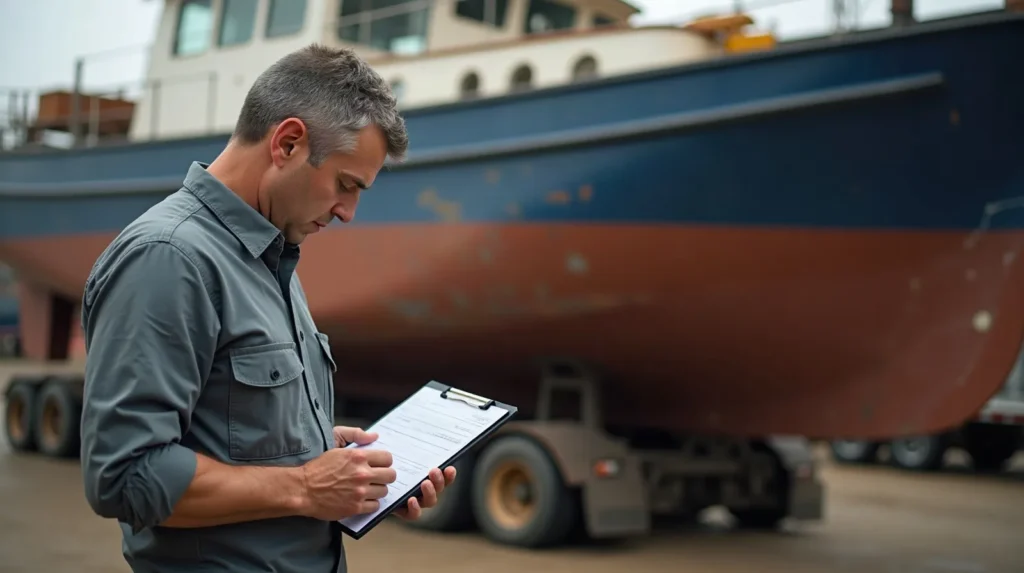
After a marine incident, the insurance process runs on evidence and sequence: notify the insurer promptly, preserve the damage exactly as it is, document everything before anything is moved, and let an appointed surveyor see the vessel before permanent repairs begin. Owners who understand that sequence get claims settled; owners who “tidy up first” argue with underwriters for months. This guide walks through how a damage survey actually works, from the owner’s side of the table.
The first day: notification and preservation
Every hull policy carries a prompt-notification obligation, and the clock starts at the incident, not at the repair quote. The first message to your broker or insurer should be factual and unembellished: what happened, when and where, what was damaged, whether the vessel is safe, and what emergency measures were taken. Emergency measures themselves are almost always covered and expected — a policyholder has a duty to prevent further loss, so pumping, patching and a tow to safety are the right actions, not claim-jeopardising ones. What jeopardises claims is silence followed by a finished repair. Photograph everything before and after each emergency step, keep every damaged component, and start a written timeline while memories are hours old rather than weeks.
What the surveyor is actually there to establish
The insurer’s appointed surveyor examines three questions: what is the proximate cause of the loss (which determines whether the policy responds), what is the true extent of damage attributable to the incident (as distinct from pre-existing wear), and what repair is reasonable and necessary to return the vessel to her pre-incident condition. Understanding this frame explains the surveyor’s behaviour — the interest in maintenance records, the close look at old corrosion near new damage, the questions about crew actions. None of it is hostility; all of it is causation. An owner’s best posture is organised transparency: logbooks, maintenance history, the incident timeline, crew statements and photographs, presented as a folder rather than extracted piecemeal.
The owner’s evidence pack
- The incident timeline — times, positions, weather, decisions, written by the master while fresh.
- Photographs and video — before emergency measures, after them, wide shots for context and close-ups for detail, with the bilges and machinery included even where they look unaffected.
- Retained parts — the failed hose, the sheared bolt, the burnt board. Physical evidence answers causation questions that photographs cannot.
- Maintenance records — the strongest general defence an owner has, because they separate incident damage from neglect.
- Existing survey reports — a recent condition survey or thickness gauging map establishes the pre-incident baseline better than any recollection.
Quotes, repairs and the approval sequence
The practical rhythm after survey: repair scope is agreed, quotations are obtained (insurers commonly expect comparable quotes for significant work), the insurer approves scope and cost basis, and only then does permanent repair begin. Emergency and mitigation work sits outside this gate; everything else inside it. Keep the paper trail unified — variations discovered mid-repair, as they always are, go back through the same approval channel with photographs. In remote-area claims a further reality applies: the reasonable-cost benchmark includes the genuine logistics of where the vessel is, so mobilisation, freight and the realistic repair options in-region belong in the quotation narrative rather than apologised for. Where an incident happened in the islands, the emergency-response record — who was called, what was done, what it cost — comes straight from the emergency repair desk’s documentation, which is written with this use in mind.
The crew’s role: statements that help instead of harm
Crew statements are evidence, and the standard for writing them is simple: facts observed, in time order, without theory. “At 0640 the bilge alarm sounded; the forward bilge was taking water near the port chine” serves the claim. “The hull must have been weak there” does not — causation is the surveyor’s question, and amateur speculation in a written statement can only create problems, never solve them. Each crew member writes independently while memory is fresh, signs and dates the page, and the master collects them into the evidence pack unedited. Disagreements between honest accounts are normal and expected; statements polished into suspicious unanimity are what experienced surveyors actually distrust.
Where the desk fits in a claim
The survey coordination desk supports owners through West Papua claims end to end: arranging attendance so the appointed surveyor, the vessel and the evidence meet efficiently in Sorong or at anchor; preparing the damage documentation and repair specification in the format underwriters expect; obtaining the comparable quotations; and running the approved repair with the photographic record a settlement requires. The desk represents the owner’s side — clear about what is incident damage, honest about what is not, because credibility with surveyors is an asset that pays across every future claim. Costs are stated in USD, and the claim-document set is delivered to the owner and broker, not held.
WhatsApp: +6281139414563
Email: bd@juaraholding.com
Survey and repair coordination contracts are issued by PT Komodo Galangan Nusantara. All quotations are stated in USD.
Frequently asked questions
Can I start repairs before the insurance surveyor has seen the vessel?
Emergency measures to prevent further loss, yes — they are expected. Permanent repairs, no: let the appointed surveyor see the damage first, or document overwhelmingly and obtain written insurer agreement where safety forces earlier action.
What should I photograph after a marine incident?
Everything, twice: wide context shots and close detail, before and after each emergency measure, including bilges and machinery spaces that appear unaffected. Date-stamped photographs and a written timeline are the claim’s backbone.
Will poor maintenance void my claim?
Wear and neglect are not insured perils, and a surveyor will separate them from incident damage. Good maintenance records are the owner’s strongest tool for keeping that separation honest and the claim intact.
How do remote-area logistics affect a claim in Raja Ampat?
Reasonable repair cost includes the real logistics of the vessel’s location — mobilisation, freight and regional repair options. Documenting those realities in the quotation narrative is normal and legitimate.
Related reading: Can a Foreign Yacht Use Commercial Shipyards in West Papua?.