Can a Foreign Yacht Use Commercial Shipyards in West Papua?
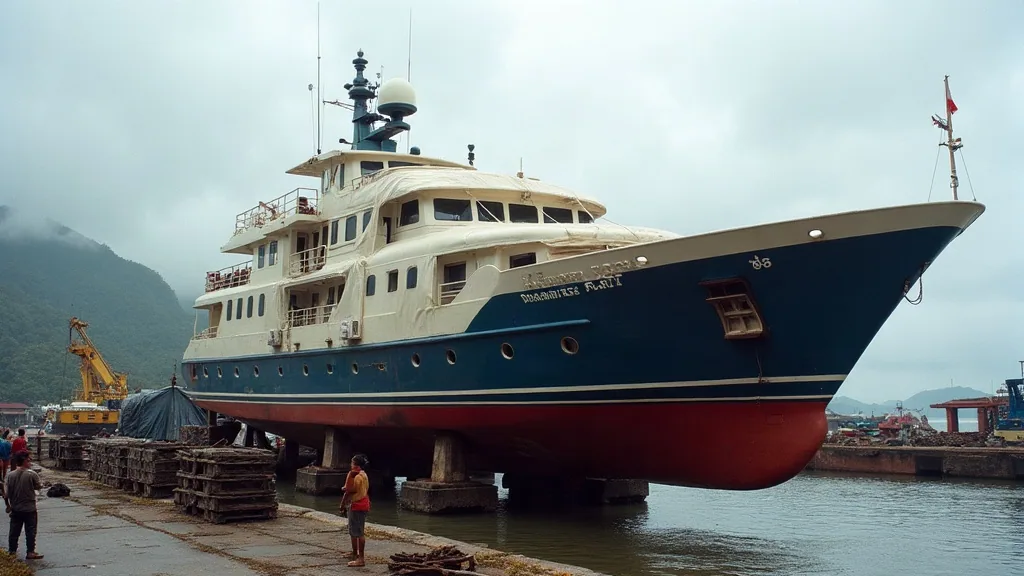
Yes. Foreign-flagged yachts and expedition vessels use commercial yard facilities in the Sorong
area, and it is a routine arrangement rather than an exception. The things that go wrong are almost never technical.
They are import status, permit validity, agent coordination and the customs treatment of spare parts — and every one of them is
solvable before you arrive if you start early.
Why a foreign yacht ends up in Sorong at all
Two situations dominate. The first is an expedition or private yacht cruising eastern Indonesia — Raja Ampat, Cenderawasih
Bay, the Banda Sea, transiting toward or from the Pacific — that needs unplanned work and finds Sorong is the nearest place with
lifting capability and a workshop base. The second is a foreign-owned vessel semi-permanently based in the region for diving or
research, for which repositioning to Bali or Batam for every docking is uneconomic.
In both cases the alternative is a delivery passage of several days each way, plus fuel, crew time and lost cruising. That is
usually what makes the local option attractive despite the paperwork.
The technical side
Commercial yards in the Sorong area handle small ships: steel liveaboards, workboats, small cargo vessels, wooden phinisi.
A private yacht is, from the yard’s point of view, a small ship with better joinery and lower tolerance for collateral damage.
Capability is genuinely there for steel and GRP hull work, running gear, coatings, machinery and systems — as set out on the
haul-out page and the
hull repair page.
What is different, and worth saying plainly: these are working commercial yards, not superyacht facilities. Dust control,
deck protection, shrink-wrapping, climate-controlled paint sheds and finish standards familiar from a European refit yard are
not the default. They can be specified and managed, and that is exactly what
owner representation is for — but they must be written into
the scope rather than assumed.
The administrative constraints
Temporary import status
A foreign-flagged vessel in Indonesia normally operates under a temporary import arrangement rather than as an imported
asset. Its validity, and the conditions attached to it, matter when the vessel is immobilised ashore for an extended period.
Establish with your agent well before the docking how a lengthy yard period interacts with that status — a refit that
outlasts the permit creates a problem that is administrative, expensive and entirely avoidable.
Cruising permit and port clearance
Movement into Sorong, and the yard period itself, need the usual clearance chain handled through an agent. Papua Barat Daya
is a real jurisdiction with real procedures, and a vessel that arrives assuming its Bali paperwork covers everything will lose
days.
Spare parts and customs
This is the one that surprises owners most. Components imported for a foreign vessel under repair have their own customs
treatment, and getting it wrong means a part sitting in a bonded warehouse while the vessel accrues lay days. Consign parts
correctly from the outset, with your agent involved, and declare them against the vessel rather than sending them as personal
effects.
Crew and labour
Yard work is carried out by the yard’s and the contractor’s labour. Owner’s crew supervising and working alongside is normal;
foreign specialists flying in to perform work have their own permit considerations, which should be checked before flights are
booked.
Class, survey and insurance
Foreign-flagged vessels typically carry their own class or flag survey regime and their own insurer’s requirements. Attending
surveyors travel to Sorong, and coordinating that attendance with the docking window is the single most schedule-critical item
in the plan — the surveyor’s diary usually binds before the slipway does. Preparation and defect close-out run through the
survey coordination desk. Insurers will normally want
notification of the yard period; a damage survey after a grounding follows the same route.
A practical sequence
- Three months out: appoint or confirm the agent, verify import status and permit validity against the
intended yard period, and check surveyor availability. - Two months out: agree the scope and confirm the vessel’s dimensions against facility limits. Order
long-lead parts and settle the customs consignment route. - One month out: confirm the docking window and tide, arrange clearance for the movement, and agree the
protection and finish standards in writing. - On arrival: documents complete, scope agreed, parts already in country.
The honest summary
Technically, yes — and for a vessel already cruising eastern Indonesia it is usually the sensible choice. Administratively,
it rewards preparation and punishes improvisation more than a Bali or Batam docking would. Owners who treat the paperwork as a
three-month workstream rather than an arrival formality have a good experience here. Those who do not, spend their savings on
lay days.
Talk to the repair desk
Send the vessel particulars — length overall, beam, draft, hull material, displacement, current location and the window you have available — and the Raja Ampat Shipyard Desk will come back with a written scope and a quotation in USD for a foreign-flagged yacht docking in the Sorong area. Quotations name the yard, the slipway or dock, the work sequence and the assumptions behind every line.
WhatsApp: +6281139414563
Email: bd@juaraholding.com
Contracts for construction, repair, refit and vessel-sale work are issued by PT Komodo Galangan Nusantara. All quotations are stated in USD.
Frequently asked questions
Can a foreign-flagged yacht legally haul out in Sorong?
Yes. Foreign-flagged yachts and expedition vessels use commercial yard facilities in the Sorong area regularly. The requirements are administrative — temporary import status, cruising permit, port clearance and agent coordination — rather than technical.
What happens if a refit lasts longer than my permit?
That is the situation to plan against. Establish with your agent before the docking how an extended yard period interacts with your temporary import status and permit validity, and build the yard window around it rather than discovering the conflict mid-refit.
How should spare parts be imported for a foreign vessel under repair?
Consigned correctly against the vessel with the agent involved, rather than sent as personal effects. Parts held in customs while the vessel accrues lay days is one of the most common and most avoidable costs on a foreign-flag docking here.
Are Sorong yards suitable for a high-finish private yacht?
They are working commercial yards, not superyacht facilities. Dust control, deck protection and finish standards must be specified in the scope and actively supervised rather than assumed — which is what owner representation is for.