Marine Electrical & Electronics Repair in West Papua
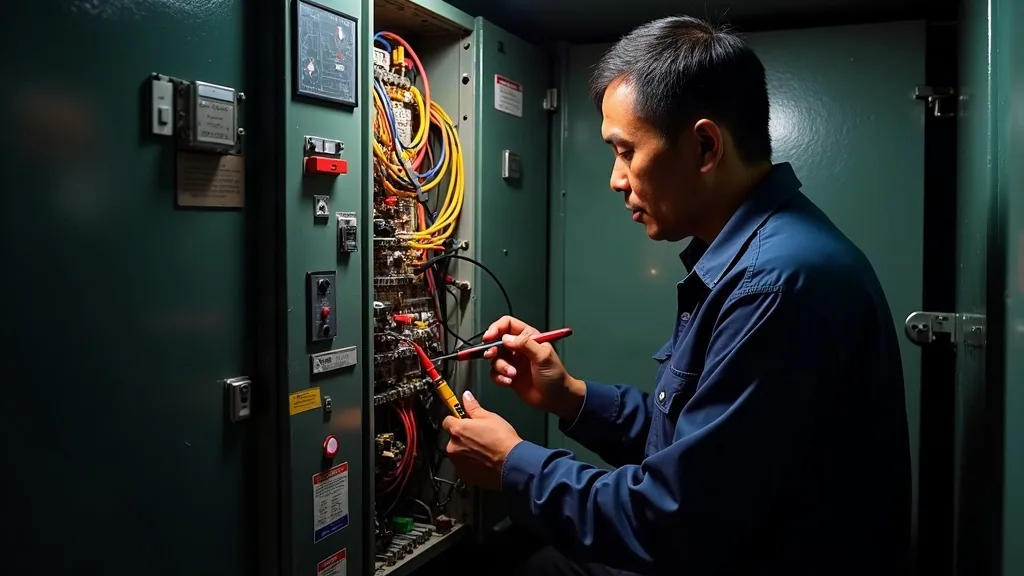
Electrical faults are the most common reason a Raja Ampat liveaboard loses guest comfort, and
usually the least well documented system on board. We fault-find AC and DC systems, rebuild switchboards and
distribution, renew battery banks and charging, and repair or replace navigation and communications equipment — at anchorage in
the islands or during a Sorong docking.
What actually breaks on this fleet
Vessels here run generators long hours, sit in salt-laden humid air, and accumulate a decade of undocumented modifications.
The failure pattern is consistent:
- Corroded terminations. Not the cable, the connection. Crimps made without the right tool, unprotected
terminal blocks and untinned copper account for a large share of intermittent faults, and they cause fires far more often than
component failure does. - Battery banks worked to death. Deep cycling without a charging regime that matches the chemistry, mixed
ages within a bank, and no monitoring beyond a panel voltmeter. - Generator and shore-power interfaces. Transfer arrangements built up piecemeal, with no clear neutral and
earthing philosophy — which is what produces the mystery corrosion that no amount of anodes will cure. - Undocumented additions. Watermakers, dive compressors, air conditioning and inverter loads added over the
years with no revision to the load calculation and no update to any drawing.
Scopes we handle
Power generation, storage and distribution
Generator electrical end, AVR and control fault-finding; alternator and regulator work; battery bank design, replacement and
commissioning across flooded, AGM and lithium chemistries with the charging profile matched to the bank; inverter and charger
installation; DC distribution rebuild with correct fusing at the source; AC switchboard renewal, RCD and breaker discrimination,
and shore-power inlet and isolation.
Bonding, earthing and galvanic issues
Where anodes disappear faster than the docking interval justifies, the cause is electrical, not chemical. We check bonding
continuity, hull and shaft potentials, stray-current paths from DC circuits, and shore-power earth arrangements. That
investigation belongs with the coating and anode work described on the
coatings page, and it is far less expensive than the plate
renewal it prevents.
Navigation, communication and monitoring
Radar, plotter, AIS, echo sounder, autopilot and VHF/HF installation, repair and replacement; antenna and cable-run renewal,
which is what most “the radar is broken” calls turn out to be; satellite communications and on-board networking; and alarm and
monitoring systems for bilge, fire, engine and tank levels. Below-waterline transducer renewal is scheduled into a
docking window because it cannot be done afloat.
Guest and hotel systems
Air conditioning electrical and controls, refrigeration, lighting circuits, cabin distribution and the small comfort items
that decide whether a charter guest writes to the operator afterwards.
Dive vessels have an extra layer
On a dive liveaboard the electrical system is also a safety system: compressor starting and control, gas-monitoring
instrumentation, dive-deck lighting, and the charging arrangements for torches, scooters and camera equipment which are a
genuine fire-risk category if the DC side has been improvised. That work is scoped together with the
compressor and nitrox service rather than in
isolation.
Where we work, and the parts constraint
Most electrical work is done afloat, which is why it suits vessels operating around Waisai, Gam, Kri, Misool and Kabui Bay
between charters. What we cannot do is conjure components. Marine-grade cable, tinned lugs, proper marine breakers, quality
battery banks and OEM electronics all move from Jakarta, Surabaya or Singapore, and substituting industrial or automotive parts
because they are available locally is how a vessel ends up with the same fault twelve months later. Send a photograph of the
switchboard and the model numbers of the affected equipment at enquiry stage and procurement starts immediately.
Documentation, which is the real deliverable
Every electrical job we complete leaves the vessel with something it probably did not have before: an updated single-line
diagram of what is actually installed, a labelled distribution board, a load calculation that reflects reality, and photographs
of cable runs before they were closed up. On the next fault — and there will be a next fault — that package is the difference
between a two-hour repair and a two-day search. It is also what a surveyor and an insurer will want to see, which is handled
through the survey coordination desk.
Repair aboard, bench repair, or replace: how we decide
Every electrical fault out here ends in one of three paths, and choosing early saves the most money. Faults in wiring, distribution, starters, alternators and control circuits are usually repairable aboard once the part is in hand. Generators and larger machines with internal damage come off their beds and go to the Sorong bench, where the work can be done properly and load-tested. Electronics are the honest exception: a failed unit is more often replaced than repaired, because manufacturer-level board repair does not exist in this region and pretending otherwise wastes your season. We put the three options and their USD numbers side by side and let you choose with real figures.
Electrical failures also travel in company — a genset that has been overheating has usually been cooking its watermaker and air-conditioning supply too. Where we find collateral symptoms we flag them against the onboard systems desk, and fleets that would rather find these things on a calendar than mid-charter run a planned maintenance programme.
Talk to the repair desk
Send the vessel particulars — length overall, beam, draft, hull material, displacement, current location and the window you have available — and the Raja Ampat Shipyard Desk will come back with a written scope and a quotation in USD for marine electrical and electronics work. Quotations name the yard, the slipway or dock, the work sequence and the assumptions behind every line.
WhatsApp: +6281139414563
Email: bd@juaraholding.com
Contracts for construction, repair, refit and vessel-sale work are issued by PT Komodo Galangan Nusantara. All quotations are stated in USD.
Further reading from the field notes
Frequently asked questions
Can electrical work be done while the vessel stays in Raja Ampat?
Almost all of it. Switchboard rebuilds, battery banks, charging, navigation and communications work are done afloat at island anchorages between charters. Only below-waterline items such as transducer renewal need a docking in Sorong.
My anodes disappear far too fast. Is that an electrical problem?
Usually, yes. Rapid or uneven anode consumption normally points to stray current, a bonding fault or a shore-power earthing problem rather than to insufficient anode mass. We measure hull and shaft potentials and trace the circuit rather than simply fitting more zinc.
Can you install a lithium battery bank?
Yes, with the charging sources, battery management, protection and load calculation designed as one system. Dropping lithium cells into a bank that was charged as flooded lead-acid is a fire and warranty problem, not an upgrade.
Do you provide drawings afterwards?
Yes. An updated single-line diagram, labelled distribution, a realistic load calculation and photographs of concealed cable runs form part of the handover file on every electrical job we supervise.