Long-Term Maintenance Budget Planning for Phinisi in Sorong
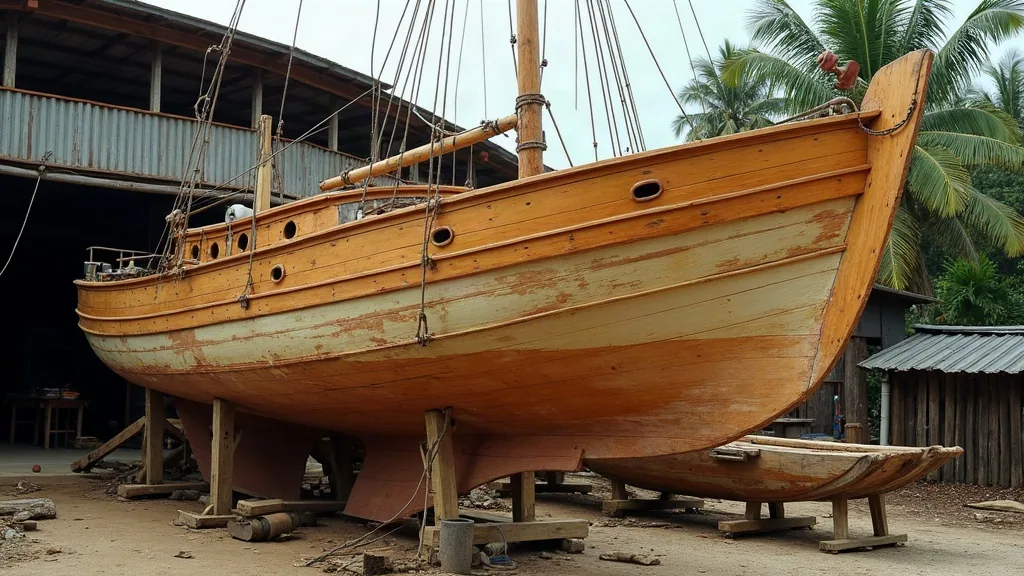
A well-maintained phinisi can earn for decades. A deferred one loses value faster than almost any
other asset in the charter business, because wooden decay compounds. The difference is rarely the quality of the
original build. It is whether the owner budgeted for a wooden hull’s actual maintenance shape rather than a steel vessel’s.
Why wooden budgeting is shaped differently
Steel wastes at a rate you can measure and extrapolate. Wood does not fail linearly. A deck leak that costs a modest amount
to trace and seal will, left for three seasons, rot a beam end, then a carlin, then the frame head beneath it, and by the time
it is visible from inside the accommodation the repair is structural rather than cosmetic. The cost curve is flat for a while
and then vertical.
Which means the highest-return line in a phinisi budget is not the docking — it is the small, unglamorous, continuous
spending on water exclusion, seams, coatings and fastening inspection. Owners who fund that consistently spend less over ten
years than owners who fund only the visible items and then pay for structural renewal.
The four spending tiers
Tier 1 — continuous, every season
Deck seam attention, water-ingress tracing at stanchions, hatches, coamings and mast partners, ventilation of enclosed
spaces, bilge cleanliness, and coating touch-up above the waterline. Individually small, collectively decisive.
Tier 2 — annual docking
Haul-out, hull wash, anodes where fitted, antifouling, running-gear inspection, seam inspection and localised caulking,
sheathing check, and machinery service to hours. Ten days to three weeks — see
haul-out and docking.
Tier 3 — every two to four years
Full recaulking and re-paying of the hull, sheathing renewal, shaft withdrawal and bearing renewal, tankage attention,
significant coating reset, and fastening sampling to track condition rather than to react to a failure.
Tier 4 — the heavy year
Fastening renewal across affected zones, plank replacement, frame and floor work, deck structure renewal, and everything
deferred through the cycle — aligned with the special survey where the vessel is classed. This is the expensive year, it is
predictable, and it should be funded across the years before it. Scope detail on the
wooden boat and phinisi repair page, and survey preparation
under special survey scope for wooden phinisi.
Building the fund
The mechanism that works is simple and unglamorous: a fixed monthly transfer into a maintenance reserve, sized so that the
Tier 4 year is already funded when it arrives. Build it by estimating the heavy year against your vessel’s actual condition —
not a generic figure — dividing by the number of months until it falls due, and adding the annual Tier 2 cost on top.
Two disciplines make it work. First, review the estimate annually against real condition data: fastening samples, moisture
readings and the previous docking’s findings. Second, do not raid the reserve for operational shortfalls, because the reserve
exists precisely to prevent the shortcut that makes the following cycle more expensive.
What deferral actually costs
- A deck leak deferred three seasons becomes beam end, carlin and frame head renewal.
- Fastening deterioration deferred one cycle turns targeted refastening into a strake-by-strake
programme. - Failed sheathing deferred through one season admits borer activity, and borer damage is not
reversible. - Hard-caulking a weeping seam repeatedly instead of re-paying it stresses the planking and the fastenings
around it, converting a seam problem into a structural one.
None of those is dramatic on the day it is deferred. All of them are expensive by the time they are visible.
Resale, and why the file is worth money
A phinisi with a documented maintenance history — fastening sample results, timber species and source for every plank
renewed, caulking and coating records, marked-up hull plans — sells to a different buyer at a different price than one with a
folder of receipts and a verbal assurance. Buyers and their surveyors price uncertainty, and on a wooden hull uncertainty is
expensive to price. Keeping the job file is one of the highest-return, lowest-cost habits available to an owner. Budget
structure across all vessel types is on the
costs and budgeting page, and execution runs through
refit management and owner representation.
Talk to the repair desk
Send the vessel particulars — length overall, beam, draft, hull material, displacement, current location and the window you have available — and the Raja Ampat Shipyard Desk will come back with a written scope and a quotation in USD for a multi-year phinisi maintenance budget. Quotations name the yard, the slipway or dock, the work sequence and the assumptions behind every line.
WhatsApp: +6281139414563
Email: bd@juaraholding.com
Contracts for construction, repair, refit and vessel-sale work are issued by PT Komodo Galangan Nusantara. All quotations are stated in USD.
Frequently asked questions
How far ahead should a phinisi maintenance budget run?
At least five years, aligned to the survey cycle. The heavy year with fastening renewal, planking and structural work is predictable and should be funded across the years preceding it rather than out of one season’s revenue.
What is the highest-return maintenance spending on a wooden hull?
Continuous water exclusion — deck seams, hatch and stanchion bases, mast partners, ventilation. Fresh water causes more decay on these vessels than seawater, and it is inexpensive to prevent and expensive to repair.
How do I estimate the heavy year for my vessel?
From condition data rather than a generic figure: fastening sample results, moisture readings, the previous docking’s findings and any open survey conditions. Review the estimate annually as new data arrives.
Does a documented maintenance history really affect resale?
Materially. Buyers and surveyors price uncertainty, and uncertainty on a wooden hull is expensive to price. A marked-up plan showing what was renewed, with timber source and fastening records, is worth considerably more than a folder of invoices.