Osmosis Blisters on GRP Hulls: Spotting Them Before Haul-Out
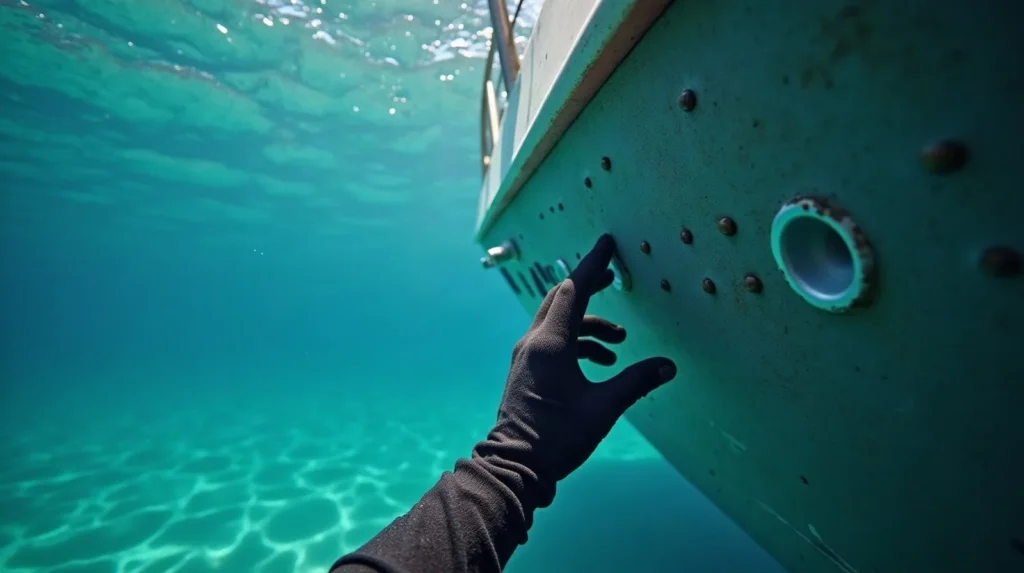
Osmosis blisters show themselves before haul-out if you know where to look: a faint mustiness in the bilge, small domed bumps under the waterline paint felt by a diver’s palm, and a vinegary smell from any blister that has been nicked open. Catching those signs while the boat is still in the water turns a panicked discovery on the slipway into a planned line item in the next docking — which, for GRP vessels working the warm waters around Raja Ampat, is exactly how it should be handled.
What osmosis actually is — and is not
Osmosis in a fiberglass hull is water migrating through the gelcoat and reacting with uncured chemicals inside the laminate. The reaction products attract more water, pressure builds, and the gelcoat lifts into a blister filled with acidic fluid. Two honest correctives to the folklore: first, blistering is primarily a cosmetic and maintenance problem in its early stages, not an imminent structural failure — boats do not sink from gelcoat blisters. Second, it does not cure itself, and in permanently warm water the chemistry runs faster than the textbook written for temperate marinas suggests. A hull that lives at 29°C sea temperature year-round, as everything based between Sorong and Misool does, deserves a more watchful eye than the same hull would get in the Mediterranean.
The in-water warning signs
- Blisters under the antifouling — the classic sign. On a hull clean, a diver running a bare palm over the bottom feels dome-shaped bumps from a few millimetres to coin-sized. Photograph and count them by area.
- The vinegar test — a pierced blister weeps fluid that smells sharp and acidic. That smell is diagnostic; trapped seawater alone does not smell like that.
- Blisters that return after antifouling — bumps reappearing within months of a repaint, in the same areas, point below the paint system rather than at it.
- Moisture patterns inside — persistent dampness on the inner laminate in areas that match external blistering deserves attention, though bilge water has many humbler causes.
What a diver cannot do is measure moisture content — meters need a dry, clean surface — so in-water findings are always provisional. Their job is to tell you whether the next haul-out needs extra days budgeted for hull investigation, not to settle the diagnosis.
Grading the problem at haul-out
Out of the water, the picture firms up within a day. Scattered small blisters confined to the outer gelcoat, popped and found dry-ish with sound laminate beneath, are a local repair: grind, wash, dry, fill and re-barrier the affected patches. Dense blistering across large areas, fluid deep in the laminate, or moisture readings that stay high after weeks of drying indicate the heavier path — full removal of the gelcoat by peeling or blasting, an extended drying period, and relamination with epoxy barrier coats. The honest middle ground, common on working boats, is staged treatment: repair the worst areas this docking, barrier-coat, and schedule the full job for a planned long yard period rather than losing a season to it now. That decision belongs in the same conversation as your docking window planning for Sorong, because drying time is the tyrant of every osmosis schedule.
The tropical complication: drying time
Every osmosis repair stands or falls on how dry the laminate is before anything is applied over it. In the humid air of a West Papua wet season, passive drying is slow, and a hull peeled and left hopefully under a tarpaulin can still read wet a month later. Realistic answers include tenting and dehumidification, hot-air assistance, and above all honest scheduling — a full peel is a commitment measured in weeks, and pretending otherwise produces barrier coats applied over damp laminate, which fail. This is the single most common way osmosis jobs go wrong, and it is a planning failure, not a chemistry failure.
What blistering does to a sale or a survey
Blistering also has a paper life. A pre-purchase surveyor will find it in the first hour on the hard, and an undisclosed blister field costs more in negotiation than the repair would have cost in the yard. The owner’s defence is the same record-keeping that serves maintenance: dated photographs, moisture readings from each docking, and receipts for any treatment done. A documented, monitored condition reads as a managed hull; the identical condition discovered without history reads as neglect.
Prevention for boats that live in warm water
For GRP vessels operating here permanently, three habits pay for themselves: an epoxy barrier coat applied while the hull is still healthy, moisture readings taken and recorded at every docking so trends are visible, and hull cleans done gently — aggressive scraping wounds gelcoat and opens the door to the very problem it is polishing over. Blister repair, barrier coating and laminate work are handled through the fiberglass and laminate repair desk for West Papua, and the method-and-cost conversation is more useful before your boat is on the slip than after. Companion reading: choosing an antifouling system for high-fouling tropical waters, since paint system and gelcoat health are decided in the same docking.
WhatsApp: +6281139414563
Email: bd@juaraholding.com
Hull repair and coordination contracts are issued by PT Komodo Galangan Nusantara. All quotations are stated in USD.
Frequently asked questions
Are osmosis blisters dangerous to the boat?
In early stages, no — blistering is a gelcoat and outer-laminate problem long before it threatens structure. Left untreated for years it degrades the laminate progressively, which is why grading and monitoring matter.
Can osmosis be diagnosed while the boat is in the water?
Only provisionally. A diver can find blisters and the acidic weep can be smelled, but moisture measurement needs a hauled, cleaned, dried surface. In-water findings tell you what to budget for the next docking.
Does warm tropical water make osmosis worse?
Faster, yes. The underlying reaction accelerates with temperature, so hulls kept permanently in warm seas develop and progress blistering sooner than identical hulls in cooler waters. Regular moisture-trend records are the defence.
How long does a full osmosis treatment take?
The work itself is measured in days; the drying is measured in weeks and dominates the schedule, especially in humid seasons. Staged local repairs during a normal docking are the honest alternative when a season cannot be lost.