Tow or Repair in Place? Deciding After a Breakdown in Raja Ampat
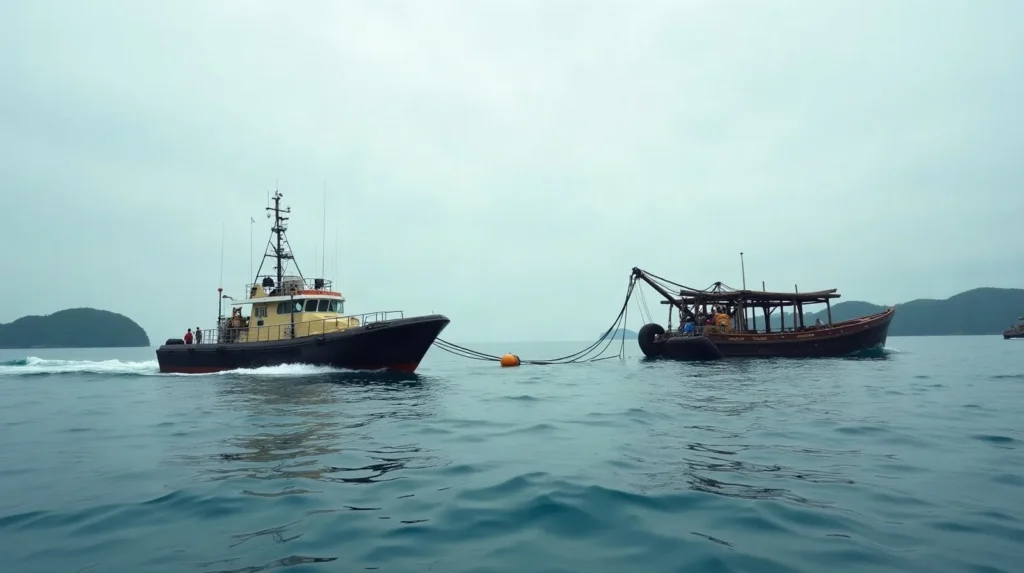
After a breakdown in Raja Ampat, the tow-or-repair decision comes down to four questions: is the vessel safe where she lies, can the fault actually be fixed afloat, what does each path cost in charter days, and what does the weather window between you and Sorong look like? Answer those honestly and the right call usually makes itself. This guide walks through each one the way the repair desk does when the first WhatsApp message arrives.
Question one: is the vessel safe where she is?
Safety overrides economics. A disabled vessel in a protected anchorage with good holding can wait days for the right repair; the same vessel drifting near a lee shore in the Dampier Strait cannot wait hours. Before comparing costs, establish anchor security, weather trend, proximity to reef, and whether the fault compromises watertight integrity. If the answer to “safe where she lies” is no, the question is no longer tow-or-repair — it is which vessel nearby can take you under tow soonest, and the desk’s job becomes finding one. Groundings have their own decision sequence, covered in the skipper’s first-hour checklist.
Question two: can the fault be fixed afloat at all?
Field repair in this area genuinely covers more than most owners expect: engine diagnostics and get-home fixes, hydraulic and steering faults, electrical failures, temporary hull patching, and a useful range of welding jobs that a mobile engineer can complete at anchor. It does not cover work that needs the hull out of the water, machine-shop capacity, shielding gas, crane access or class survey attendance. The dividing line is usually obvious from photographs and a description — which is why the desk asks for both before recommending anything. A useful rule: if the repair needs parts, the real question becomes parts logistics, because a technician can often travel faster than a component clears freight to Sorong.
Question three: the honest arithmetic
Compare the full cost of each path, not the headline numbers:
- Repair in place — mobilisation of engineer and boat from Sorong staging, hours on site, possibly a second trip when parts arrive, and the risk the field fix does not hold. Inexpensive in transit, expensive in uncertainty.
- Tow to Sorong — the towing vessel’s time at commercial rates, weather delay risk, and the port and facility costs on arrival. Expensive up front, but it puts the vessel where every tool, part and trade exists, and it converts an open-ended anchorage problem into a scheduled repair.
For a working charter vessel the deciding currency is usually days, not dollars. A field repair that returns the boat to service in two days beats a tow that costs eight, even at similar money. But a field repair that fails mid-charter costs more than both. The desk’s cost framing — what drives price in each direction, stated in USD without invented numbers — is set out in the cost and budgeting guide for repair work in West Papua.
Question four: the weather window
A tow from Misool to Sorong is a serious passage for two vessels lashed by a line, and the south-east season can close that door for days at a time. Wind against tide in the strait builds short, steep seas that chafe towlines and exhaust crews. If a viable weather window exists now and the fault cannot be fixed afloat, taking the window can be worth more than waiting for a less costly arrangement. If no window exists, the decision defers itself — and the anchorage-safety question from step one gets asked again, daily.
How a tow is actually arranged out here
There is no dedicated salvage tug on standby in Raja Ampat, and any desk that implies otherwise is selling something. What exists is a working population of tugs, landing craft, pioneer vessels and sturdy fishing boats moving through Sorong, plus the occasional sister liveaboard willing to assist. Arranging a tow means finding the right vessel among them, agreeing commercial terms before departure — daily rate or lump sum, who provides the towline, who carries what risk — and preparing your own vessel: chafe protection at the fairleads, a bridle if possible, navigation lights working, crew briefed on watch rotation and line-axe stations. The emergency desk handles that coordination, including the uncomfortable conversations about terms, so the master can concentrate on the seamanship.
Arriving under tow: make the destination ready
A tow that ends with the vessel anchored off Sorong waiting three days for a berth or a slip slot wastes most of what it bought. While the tow is underway, the destination gets prepared in parallel: the receiving facility or anchorage confirmed, the repair scope pre-briefed from the photographs already sent, parts ordering started, and — where the damage needs the hull out of the water — the docking window request lodged before arrival. Handled this way, the tow delivers the vessel into a repair that has already begun on paper, and the days the tow cost start earning themselves back immediately.
WhatsApp: +6281139414563
Email: bd@juaraholding.com
Tow coordination and repair contracts are issued by PT Komodo Galangan Nusantara. All quotations are stated in USD.
Frequently asked questions
Is there a salvage tug based in Raja Ampat?
No dedicated standby tug exists in the islands. Tows are arranged from the working fleet in and around Sorong — tugs, landing craft and capable local vessels — with commercial terms agreed before mobilisation.
How much does a tow to Sorong cost?
It depends on distance, vessel size, weather and which towing vessel is available; terms are agreed in USD before departure. The desk presents the realistic options rather than a single invented figure.
When is repairing in place the wrong choice?
When the fault needs haul-out, machine-shop work or class attendance; when a failed field fix would leave the vessel unsafe; or when parts delay means the boat sits idle longer than a tow-and-repair cycle would take.
What should my crew prepare before taking a tow?
Chafe gear at the fairleads, a bridle where the bow arrangement allows, working navigation lights, a watch rotation, and a briefed plan for slipping the tow in an emergency. The towing plan should be agreed between both masters before the line goes across.