Losing Steering at Sea: Emergency Rudder & Hydraulic Fixes
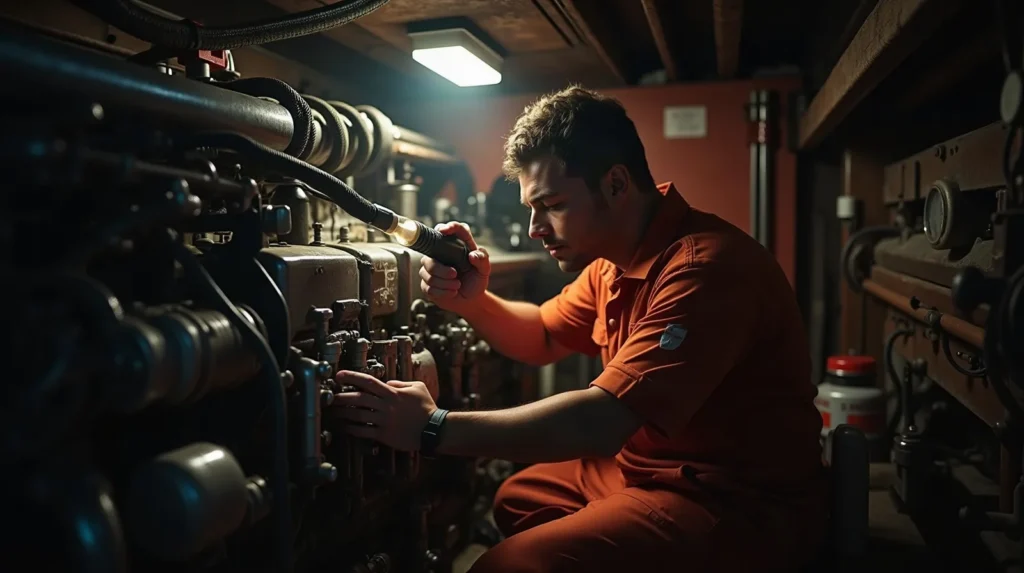
When a boat loses steering at sea, the cause is almost always one of four things: hydraulic fluid loss, a failed steering pump or ram, a mechanical disconnection between helm and rudder, or damage to the rudder itself. Each has an emergency answer that a competent crew can apply far from help — and in the Raja Ampat operating area, where the nearest workshop support is in Sorong, knowing those answers before you need them is part of seamanship.
First move: slow down and find the failure point
The moment steering response disappears, come off the throttle. At low speed most hulls will hold a rough line with engines alone, and you buy time to think. Then locate where the system has failed — the split is simple:
- Helm turns freely with no resistance — hydraulic fluid loss or a sheared mechanical link. Look for oil in the lazarette and check the reservoir.
- Helm is stiff or locked — a seized ram, a jammed quadrant, or something physically fouling the rudder.
- Helm feels normal but the boat does not answer — the rudder stock may have sheared, or the rudder blade is damaged or gone.
Send one crew member to the steering compartment with a torch while the helm is worked gently. Nine times out of ten the diagnosis takes two minutes once someone is actually looking at the gear.
Hydraulic failures: the most common and the most fixable
On liveaboards and motor yachts, hydraulic steering dominates, and its failures are mostly fluid failures. A weeping hose fitting that has gone unnoticed for weeks finally lets go, the reservoir empties, and the helm spins uselessly. The emergency sequence:
- Find the leak. Follow the wet trail — it is usually at a crimp fitting, a copper line chafed against structure, or the ram seals.
- Isolate or plug it. Many systems can be bridged to a single helm or a single ram. A cracked line can be cut and joined with a compression fitting from the spares box.
- Refill and bleed. Any clean hydraulic oil is better than an empty system in an emergency; even engine oil will get you home in a genuine crisis, accepted as a flush-and-service item later.
- Bleed at the ram until the helm firms up. Two people, one turning, one watching bubbles.
Vessels that carry a litre of steering fluid, a hose repair kit and a bleed procedure taped inside the lazarette hatch turn this whole event into a thirty-minute delay. Vessels that do not, drift.
Mechanical and cable failures
Wire-and-quadrant systems fail at the terminals; push-pull cables fail inside their sheaths. The emergency answer is the emergency tiller — every vessel has a rudder-stock head designed to take one, and most crews have never actually shipped it. Rig it, then rig relieving tackles (small blocks and line led from the tiller to winches or cleats either side) so a human is not fighting the whole sea. If the quadrant itself has slipped on the stock, re-seating and pinning it is usually possible with hand tools once the load is off.
Autopilot drives: the quiet third system
Many vessels effectively carry a spare steering system without realising it: the autopilot drive. If the manual hydraulics have failed but the pilot’s own pump and ram circuit is separate, the pilot may still steer the boat perfectly well — and the reverse is equally true, so a pilot fault should always be tested against hand steering before anyone declares an emergency. Knowing which components the two systems share, and which they do not, is a ten-minute study worth doing in harbour rather than mid-passage.
Rudder damage: steering without a rudder
A bent or lost rudder after a strike is the hardest case. Options that genuinely work, roughly in order of effectiveness: steer with twin engines if you have them; tow a drogue or warp from one quarter and adjust its lead to hold a course; build a jury rudder from a spinnaker pole and locker floorboard if the sea state allows. None of these is elegant. All of them have brought boats home. If the rudder stock is leaking where it passed through the hull, treat that as a flooding problem first — stuff and wedge the gland area before worrying about course-keeping. Our first-hour grounding checklist covers the ingress-control priorities that apply equally here.
After the emergency: permanent repair paths
Every emergency steering fix is temporary by definition. Hydraulic rams want proper seal kits, hoses want correct-pressure replacements, and any rudder that has been bent wants its stock checked for cracks before it is trusted again. The hydraulics and steering-system repair desk coordinates exactly this work for vessels in the Raja Ampat area — seal kits and hose fabrication staged through Sorong, a field engineer where the job can be done afloat, and a docking plan where the rudder has to come out. Describe the failure on WhatsApp with photographs of the gear and the desk will scope the permanent fix honestly, including what should be carried as spares so the same failure never strands you twice.
WhatsApp: +6281139414563
Email: bd@juaraholding.com
Repair and coordination contracts are issued by PT Komodo Galangan Nusantara. All quotations are stated in USD.
Frequently asked questions
What is the most common cause of steering failure on a motor yacht?
Hydraulic fluid loss through a leaking hose, fitting or ram seal. It announces itself as a helm that suddenly turns with no resistance, and it is fixable at sea if the vessel carries fluid and a basic hose kit.
Can I use engine oil in a hydraulic steering system in an emergency?
As a genuine last resort, yes — clean engine oil will transmit pressure and get most systems working well enough to reach shelter. The system should then be flushed and refilled with the correct fluid during repair.
How do I steer if the rudder is gone completely?
Twin-engine differential thrust is the best answer where fitted. Otherwise a drogue or long warp towed from one quarter, adjusted side to side, will hold a workable course downwind in most conditions.
Where can steering gear be properly repaired near Raja Ampat?
Field repairs afloat are possible for hydraulic and linkage faults; ram overhauls, hose fabrication and any rudder removal are staged through Sorong. The desk scopes which path applies from photographs before anyone travels.