How Long Does a Full Liveaboard Refit Take in West Papua?
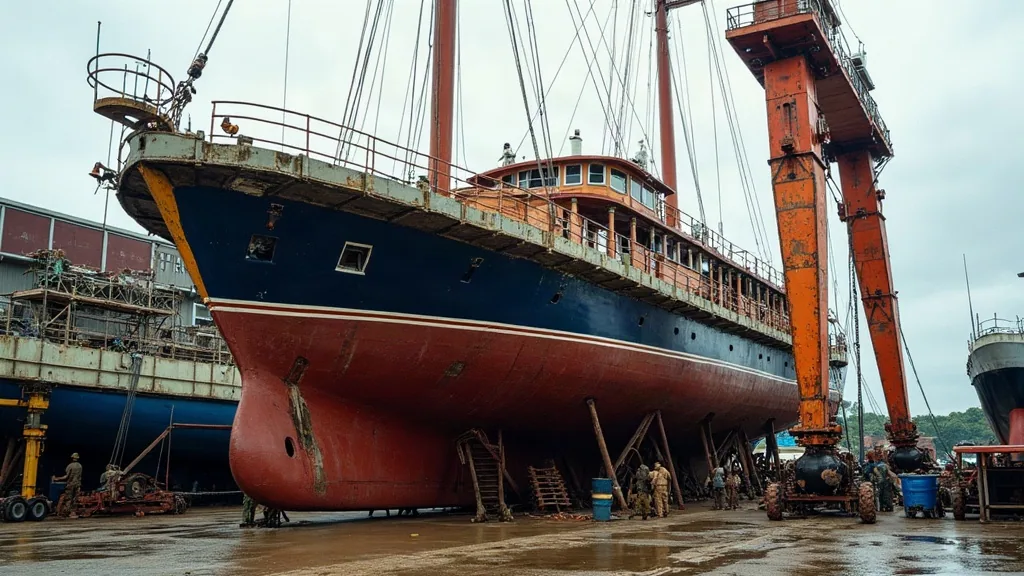
A full liveaboard refit in West Papua — hull, machinery, systems and interior — realistically takes
three to six months. A survey docking with steel renewal takes three to six weeks. A routine annual docking takes one to three
weeks. Those are planning figures for a scope settled before arrival. Every week added beyond them is almost always
traceable to one of four decisions made months earlier.
The durations, by programme type
| Programme | Typical duration | Binding constraint |
|---|---|---|
| Annual docking, routine work | 1–3 weeks | Coating cure |
| Survey docking with steel renewal | 3–6 weeks | Opening-up and surveyor attendance |
| Systems and interior refit, afloat | 4–10 weeks | Material lead time |
| Full refit — hull, systems, interior | 3–6 months | Sequence and supply chain |
| Conversion to dive or expedition service | 6–12 months | Design, stability, survey approval |
What actually sets the schedule
1. Supply chain, not labour
This is the West Papua factor and it dominates everything else. Common consumables are local or come from Makassar and
Surabaya within days. Genuine OEM engine components, marine-grade electrical materials, specialist coatings and electronics
move from Jakarta or Singapore in weeks. A refit planned as though parts arrive on demand will slip by exactly the length of
the longest lead item — and it will slip while lay days are being charged. The single highest-return action in any refit here is
ordering against a confirmed scope before the vessel arrives.
2. Sequence
Order of work determines duration more than headcount. Structural steel must be complete before blasting in that area;
blasting before primer; primer and antifouling before reinstatement; final shaft alignment after the vessel is afloat and
loaded. Adding welders to a job that is waiting for paint to cure changes nothing. Getting the sequence wrong means paying for
the same preparation twice, which is covered under
refit project management.
3. Coating cure and weather
Paint sets the floor on almost every docking. Products have minimum overcoat intervals, and in tropical humidity the dew
point margin frequently stops work entirely. Rain stops blasting and painting outright. A wet-season refit is a longer refit
whatever the programme says — see coatings.
4. Discovery
Every honest refit has a moment where something is opened up and turns out worse than expected. A tank with more wastage
than the readings suggested, fastenings softer than the sample indicated, a wiring loom that cannot be reused. Scope that is
genuinely unknown should sit in a labelled provisional section from the start, so that discovery adjusts a plan rather than
detonating it.
The four decisions that shorten a refit
- Survey before you scope. Thickness readings, moisture readings, tank inspection and machinery history
before the budget is fixed. Money spent here buys weeks later. - Order long-lead items early. Against the confirmed scope, weeks before the lift, not on arrival.
- Split afloat work out. Interior, electrical, electronics and dive systems do not need the vessel on the
hard. Running them at anchorage in Raja Ampat before or after the docking compresses the dry period to what genuinely requires
it. - Put one person in charge on site. Every day a decision waits for an owner in another time zone is a lay
day. Owner representation exists precisely to close that gap.
Downtime is a cost line, not a schedule line
For a working liveaboard, lost charter revenue during a refit frequently exceeds the entire yard account. That single fact
should drive the whole plan: it justifies paying for a faster coating system, justifies air-freighting a component rather than
waiting for sea freight, and justifies the assessment work that stops the scope expanding mid-refit. It is also the strongest
argument for scheduling the refit into the low season rather than accepting whichever weeks are left. Cost structure is on the
budgeting page.
A realistic full-refit sequence
For a 30–40 metre steel liveaboard with a genuine hull, systems and interior scope:
- Weeks 1–2: lift, wash, thickness campaign, opening-up, defect list finalised, variations agreed.
- Weeks 3–8: steel renewal, tank work, running gear withdrawn, machinery stripped, interior demolition.
- Weeks 6–12: blasting and coating in cleared areas, tank coating, machinery overhaul in the workshop.
- Weeks 10–18: reinstatement — systems, electrical, joinery, dive equipment — with inspection holds before
anything is closed up. - Weeks 18–22: antifouling, launch, alignment afloat, commissioning, sea trial, punch-list close-out.
Those phases overlap, which is exactly why sequence planning matters. A refit run as five strictly sequential blocks takes
half again as long as the same scope run with proper overlap.
Talk to the repair desk
Send the vessel particulars — length overall, beam, draft, hull material, displacement, current location and the window you have available — and the Raja Ampat Shipyard Desk will come back with a written scope and a quotation in USD for a refit programme and its realistic duration. Quotations name the yard, the slipway or dock, the work sequence and the assumptions behind every line.
WhatsApp: +6281139414563
Email: bd@juaraholding.com
Contracts for construction, repair, refit and vessel-sale work are issued by PT Komodo Galangan Nusantara. All quotations are stated in USD.
Frequently asked questions
Can a full liveaboard refit be done in one low season?
A focused hull and systems refit can fit a low season if the scope is settled and long-lead parts are ordered in advance. A full refit including interior renewal generally needs three to six months, which usually means accepting one season out of service.
What is the most common cause of refit delay in West Papua?
Parts lead time. Components arriving from Jakarta or Singapore while lay days accumulate is the dominant cause, and it is almost entirely preventable by ordering against a confirmed scope before the vessel arrives.
Does adding more workers shorten the schedule?
Only where labour is the constraint. It cannot shorten coating cure, parts transit or surveyor attendance, and those are what set the floor on most West Papua refits.
Should interior work be done during the docking?
Usually not all of it. Interior, electrical and dive-system work does not need the vessel out of the water, so running it afloat before or after the lift keeps the expensive dry period as short as the dry work genuinely requires.