How Long Does Antifouling Paint Last in Raja Ampat Waters?
Twelve to eighteen months for a working liveaboard, and around twenty-four for a vessel on a
hard-matrix system that moves regularly. Those are the planning figures. What determines where in that range you land
is duty cycle, coating specification and surface preparation — in that order — and only one of the three is decided by the paint
you buy.
Why Raja Ampat is hard on antifouling
The archipelago sits in warm, nutrient-rich water with exceptional biodiversity, which is precisely what makes it one of the
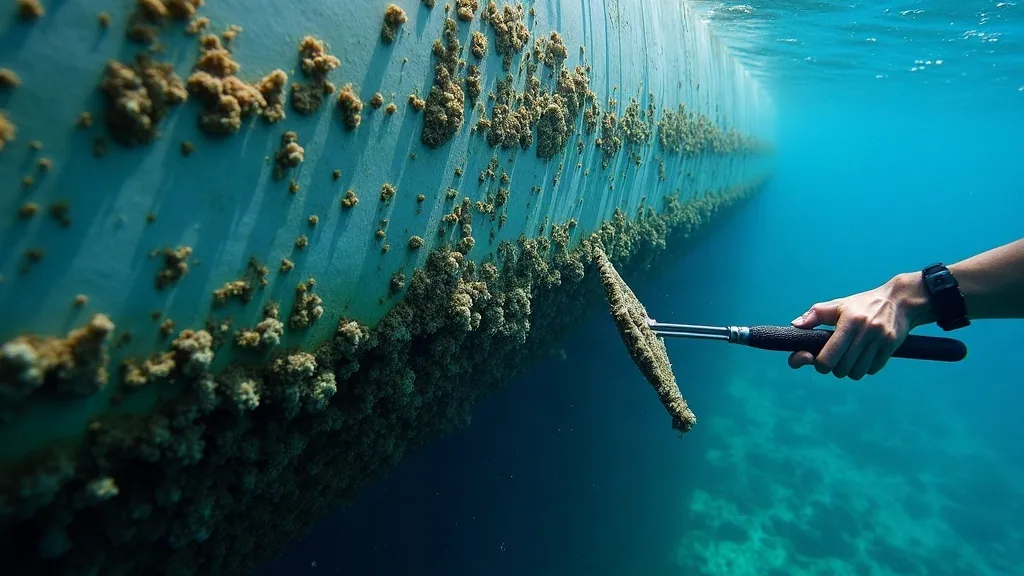
world’s great dive destinations and also what makes it brutal on hulls. Fouling here establishes fast and progresses through
slime, weed and hard growth in a fraction of the time it takes in temperate water.
Compounding that, the fleet’s operating pattern works against the most common coating type. A dive liveaboard typically
spends a large share of each day at anchor and moves relatively short distances at modest speed. Self-polishing copolymer
antifoulings rely on water movement across the hull to renew the active surface. A vessel sitting at anchor for eighteen hours a
day is not polishing that film, and the scheme underperforms its rated life — through no fault of the product.
Choosing against duty cycle, not against price
- High anchor time, low mileage — typical liveaboard. Hard-matrix or high-copper systems, or a hybrid,
generally outperform an SPC here. - Regular movement, moderate speed — transfer and workboats. SPC systems work closer to their rated
performance. - Long lay-up periods — vessels out of season. Consider the lay-up in the specification, because a scheme
that spends four months static will foul regardless of what it does when working. - Aluminium hulls and outdrives — copper-free systems, and a bonding check to go with them.
Getting this right is worth more than any negotiation on the price of the paint, because the interval it buys is measured in
dockings. Full scope on the coatings page.
Preparation decides more than product
Three preparation failures account for most premature coating breakdown in this region:
- Overcoating a failing or unknown scheme. The new paint is only as attached as what is underneath.
Adhesion testing before the decision costs almost nothing and prevents the most expensive outcome available. - Painting a surface that was washed but not dried, or that still carries salt. In tropical humidity this
is a live risk on every docking and it is managed by measuring, not by looking. - Film thickness by eye. Two thin coats and three correct ones look identical on launch day. They are not
identical a year later, and without wet-film readings there is no way to establish which one you paid for.
How to extend the interval
- Light, frequent in-water cleaning rather than one aggressive scrub. An aggressive clean on a soft
self-polishing film strips the biocide reservoir and shortens the scheme’s life — you can clean a hull into needing a
docking. - Attend to the boot-top and waterline. The most exposed band and usually the first to fail. Localised
attention here buys months across the whole hull. - Fix the anode and bonding problems. Persistent electrolysis undermines coatings around fittings and
appendages. If anodes disappear faster than the interval justifies, that is an electrical investigation, not a paint
decision — see marine electrical. - Keep the coating record. Product, batch, conditions, film thickness and date. It is what makes the next
specification an evidence-based decision instead of a repeat of whatever happened last time. - Time the docking sensibly. A scheme applied in a dry spell with good cure conditions outperforms the same
scheme applied between rain showers — see haul-out planning.
Reading the signs that the interval is up
Hard growth returning within weeks of a clean, biocide exhaustion visible as the signal coat showing through, coating
breakdown at the waterline and boot-top, and a measurable increase in fuel consumption or a drop in cruising speed at the same
engine load. That last one is the most reliable indicator on a working vessel and the most frequently ignored — fouling costs
fuel long before it becomes visible to anyone standing on the dock.
Fitting it into the maintenance rhythm
For most Raja Ampat liveaboards the sensible pattern is an annual docking with a full coating renewal every second year and
localised attention in the intervening one, adjusted by what the in-water inspections show. That pattern also aligns with the
running-gear and structural items that need a lift anyway, which is what keeps total downtime low. Cost structure across a
multi-year plan is on the budgeting page.
Talk to the repair desk
Send the vessel particulars — length overall, beam, draft, hull material, displacement, current location and the window you have available — and the Raja Ampat Shipyard Desk will come back with a written scope and a quotation in USD for a coating specification for Raja Ampat conditions. Quotations name the yard, the slipway or dock, the work sequence and the assumptions behind every line.
WhatsApp: +6281139414563
Email: bd@juaraholding.com
Contracts for construction, repair, refit and vessel-sale work are issued by PT Komodo Galangan Nusantara. All quotations are stated in USD.
Frequently asked questions
How long does antifouling last on a Raja Ampat liveaboard?
Twelve to eighteen months is the realistic planning figure, with some hard-matrix systems reaching around twenty-four months on vessels that move regularly. Long anchor time in warm, nutrient-rich water pulls that down.
Why does my self-polishing antifouling underperform?
Because it needs water movement to renew the active surface. A liveaboard at anchor for most of the day is not polishing the film, so the scheme underperforms its rated life. Hard-matrix or hybrid systems usually suit this duty cycle better.
Does in-water cleaning extend antifouling life?
Light, frequent cleaning does. Aggressive scrubbing on a soft self-polishing film strips the biocide reservoir and shortens the scheme’s life — it is possible to clean a hull into needing an early docking.
What is the earliest sign that antifouling is finished?
Increased fuel consumption or reduced speed at the same engine load, usually well before growth is visible. Hard growth returning within weeks of a clean, and the signal coat showing through, confirm it.