Wooden Boat & Phinisi Hull Repair in Sorong and Raja Ampat
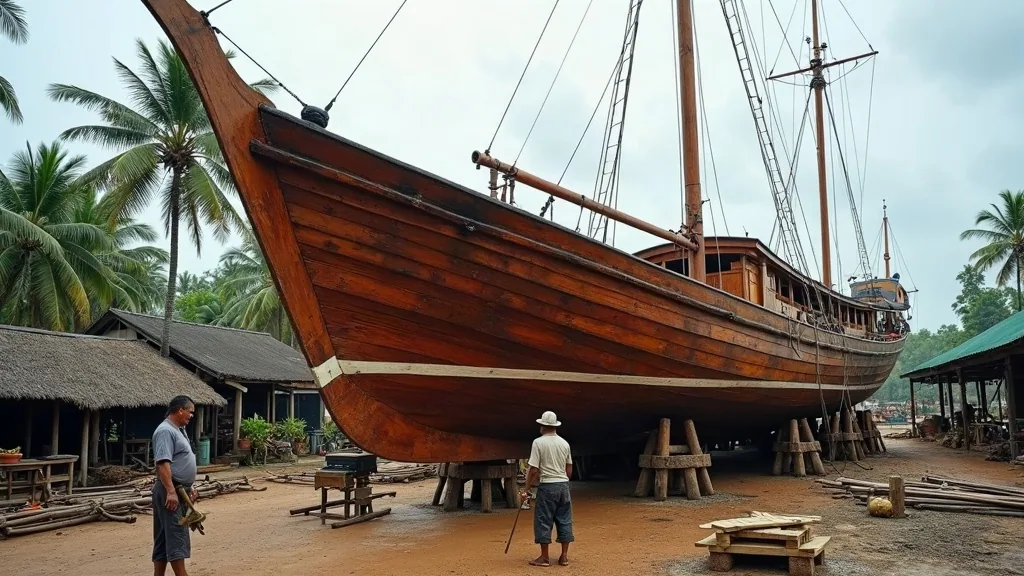
Wooden phinisi working Raja Ampat are repaired on the hard in the Sorong area, and the work that
matters most is fastenings, frames and caulking — not the paint that hides them. We scope wooden hull work from an
opened-up inspection rather than from a walk-around, and we plan it around the vessel’s charter calendar because a phinisi in a
shed earns nothing.
Why wooden hulls in this region fail where they do
A Sulawesi-built phinisi running eastern Indonesia lives with three constant enemies. Warm water accelerates marine borer
activity anywhere the sheathing or coating fails. Fresh water — rain, deck leaks, condensation behind joinery — rots the top
timbers, deck beams and frame heads far more often than seawater rots the bottom. And electrolysis, poor bonding and mixed
metals quietly eat iron and bronze fastenings from the inside while the plank surface still looks sound.
The consequence is that a hull can look excellent under fresh paint and be structurally tired underneath. That is why we
start with fastening sampling and moisture readings, not with a coating specification.
Structural scopes we handle
- Plank replacement — single planks, garboard and topside strakes, in ironwood, teak or the local hardwoods
the hull was originally built in, matched for species and seasoning rather than for whatever is on the timber yard floor. - Fastening renewal — withdrawal sampling to assess condition, then refastening in bronze or hot-dip
galvanised material consistent with the surrounding structure. Mixing fastening metals on a wooden hull creates a new corrosion
cell and a second repair. - Frames, futtocks and floors — sistering or full renewal of frame sections, floor renewal at the keel-plank
junction, and reinstatement of the fastening pattern through the repair. - Keel, stem, sternpost and deadwood — scarfed repairs where the timber is sound outside the defect and full
replacement where it is not. - Deck and beam structure — beam ends, carlins, king planks and deck renewal, usually driven by long-standing
water ingress at stanchions, hatch coamings and mast partners. - Caulking and paying — raking out, recaulking and re-paying seams as a system, with the hull moisture
condition taken into account so the seams are not closed on a swollen hull that will shrink two months later. - Sheathing and protection — renewal of copper or composite sheathing, and epoxy or barrier systems tied into
the coatings programme.
Systems and interior work on wooden liveaboards
Most phinisi refits are only half a hull job. Tanks, plumbing runs, bilge systems, guest cabin joinery, air conditioning and
the electrical loom all get renewed in the same docking because everything is already opened up. Machinery and electrical scopes
run through the engine and running gear and
marine electrical pages; for dive-operating phinisi, the
compressor room and high-pressure lines are covered under
dive liveaboard systems.
Where the vessel is worked
Serious structural work happens ashore in the Sorong area, where the hull can be dried, opened up and left long enough for
timber and coatings to behave. Light work — deck seams, joinery, small plank repairs above the waterline, fastening inspection —
can be handled at anchorage in Raja Ampat around Waisai, Gam, Kri, Misool or Kabui Bay, and we will send a team out where that
makes commercial sense. The judgement is simple: if the repair needs the timber dry, the vessel comes out. Booking and dimensional
limits are on the haul-out page.
Life-extension versus restoration
Owners generally arrive with one of two questions. The first is “how do I keep this vessel earning for another five to eight
years without a shutdown”. That is a life-extension programme: sample, prioritise, do the structural work that protects the
asset, and spread the cosmetic work across two or three dockings. The second is “what would it take to bring her back properly”.
That is a restoration, it is measured in months rather than weeks, and it belongs in a
managed refit with a defined scope and a contingency line.
Both are legitimate. What does not work is buying the first with the expectations of the second.
Survey and class considerations
Wooden passenger vessels in Indonesia carry their own survey scope, and surveyors will want fastening samples, frame
condition, caulking condition and evidence of the bilge and firefighting arrangements. Preparing for that — including which
areas to open up before the surveyor arrives, so the docking is not extended waiting for a second attendance — is handled on the
survey coordination page. Budget shapes for phinisi
maintenance across a five-year cycle are set out under
refit budgeting.
What we hand over
Marked-up hull plans showing every plank, frame and fastening zone renewed; timber species and source for the material used;
photographs of the structure before it was closed up; caulking and paying specification; and the coating record. On a wooden
hull that file matters more than on a steel one, because in ten years nobody will remember which strake was replaced and the
next owner’s surveyor will assume the worst.
Talk to the repair desk
Send the vessel particulars — length overall, beam, draft, hull material, displacement, current location and the window you have available — and the Raja Ampat Shipyard Desk will come back with a written scope and a quotation in USD for phinisi and wooden hull work. Quotations name the yard, the slipway or dock, the work sequence and the assumptions behind every line.
WhatsApp: +6281139414563
Email: bd@juaraholding.com
Contracts for construction, repair, refit and vessel-sale work are issued by PT Komodo Galangan Nusantara. All quotations are stated in USD.
Frequently asked questions
Can a phinisi be repaired in Raja Ampat, or does it have to go to Sulawesi?
Routine and moderate structural work is handled in the Sorong area, which keeps the vessel close to its charter grounds. Full rebuilds and major re-planking are sometimes still more economic in the traditional building centres of South Sulawesi because of timber supply and shipwright depth. We will tell you which side of that line your scope falls on before you move.
How do you check fastenings without destroying the plank?
By withdrawing a statistically sensible sample from the areas most likely to fail — garboard, turn of bilge, topside strakes near the waterline and any zone with staining or weeping — and assessing condition, then extrapolating. Sampling holes are plugged and sealed as part of the work.
Is ironwood still available for plank replacement?
Availability varies by season and by supplier, and legal sourcing documentation is part of the procurement. Where the original species is unavailable or not legally sourceable, we specify an equivalent and record the substitution in the job file rather than quietly mixing timbers.
How long does a phinisi hull refit take?
A focused structural docking with fastening renewal, some planking and full caulking usually runs four to eight weeks. Interior renewal, tankage and systems in the same period push it towards three months. The timber and coating cure times, not the shipwrights, set the floor on that schedule.