Choosing Antifouling for High-Fouling Eastern Indonesian Waters
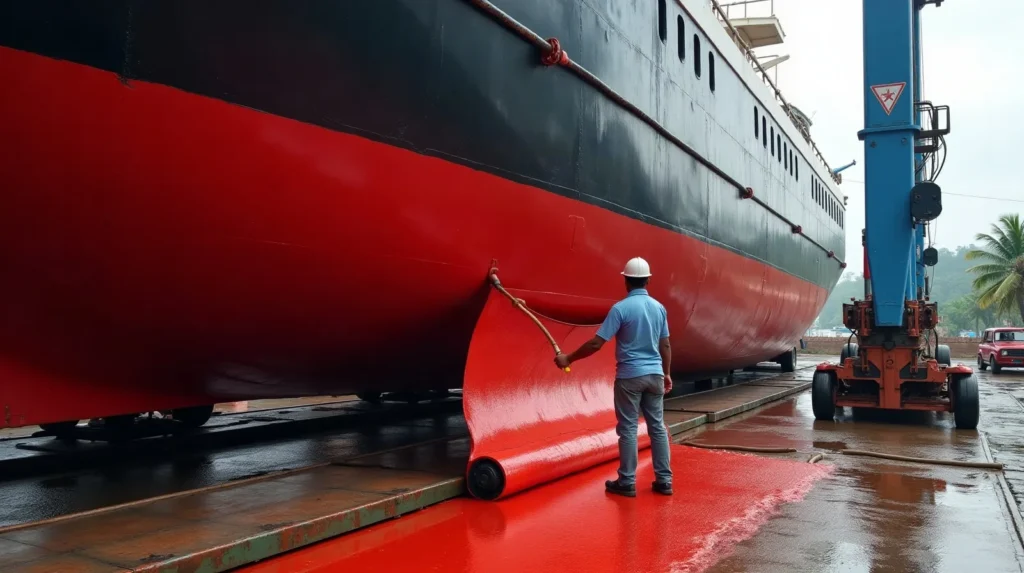
In the warm, nutrient-rich waters of eastern Indonesia, the right antifouling choice comes down to matching paint chemistry to how the boat is actually used: self-polishing copolymers for vessels that move most weeks, harder copper-heavy coatings for boats that sit, and a realistic acceptance that any system here works a shorter life than its datasheet promises. This guide explains the choice the way it gets made on the slipway, not the way it reads in a brochure.
Why these waters foul boats so fast
Sea temperature around 28–30°C all year, strong sunlight, and water thick with nutrients moving through the Dampier Strait make this one of the most biologically productive stretches of ocean on earth — magnificent for divers, merciless for hulls. Slime films establish in days, weed follows in weeks, and barnacle recruitment happens continuously rather than in a spring pulse as temperate sailors expect. The practical consequence: fouling pressure here sits at the very top of the scale paint manufacturers design against, and any coating decision that ignores this starts wrong.
The real choice: self-polishing versus hard coatings
- Self-polishing copolymer (SPC) systems wear away in a controlled fashion as water moves over them, constantly exposing fresh biocide. On a liveaboard that runs weekly itineraries most of the year they perform well, because the polishing action needs water flow. Their weakness is idle time: a boat laid up at anchor through a long off-season polishes nothing and fouls anyway.
- Hard, high-copper coatings hold their biocide in a tougher film that tolerates scrubbing. They suit boats that sit for long periods, tenders dragged over sand, and hulls whose crews clean regularly. Their weakness is depletion: once the surface layer exhausts, fouling accelerates and only repainting restores performance.
- Foul-release (silicone) systems deserve an honest mention: they work through slickness rather than biocide and can perform brilliantly on vessels that move fast and often — but they are unforgiving of contact damage, awkward to repair in basic facilities, and rarely the right call where slipway timber shoring and workboat life are involved.
For most working vessels here, the decision resolves to a good SPC for boats in near-continuous service and a hard copper paint for everything else. The premium tiers of either chemistry earn their money in these waters; the economy tiers do not.
Scheme thickness and the off-season problem
Two scheme decisions matter as much as chemistry. First, film thickness: in maximum-fouling service, an extra full coat over the datasheet minimum — with a second coat concentrated at the waterline, leading edges and rudder — is the least expensive performance upgrade available, because most systems here run out of paint before they run out of season. Second, the lay-up plan: if the vessel will sit through a monsoon off-season, say so when the scheme is specified. The answer may be a harder final coat, a planned mid-cycle hull clean, or simply honest expectations about what the bottom will look like when service resumes. Surprises in this subject are all self-inflicted.
Anodes, transducers and the bits paint forgets
An antifouling plan that stops at the hull plating leaves the expensive failures untouched. Propellers and shafts foul fastest of all and want their own foul-release or hard-wearing treatment; transducers need the specific water-based coatings their manufacturers tolerate; and anodes must never be painted at all — a painted anode is a decorative one. Sea chests, bow thruster tunnels and strainer grates deserve deliberate attention with a brush, because these are the passages whose blockage shows up later as an overheating engine rather than a slow hull.
Application: where good paint goes to die
Most “paint failures” investigated on the hard are application failures. Antifouling applied over inadequately washed salt, over chalky dead coating that should have been scraped back, in the wet hours of a rainy afternoon, or at half the specified film build will disappoint regardless of the tin’s quality. A proper job needs fresh-water washing at haul-out, removal of failed old coating rather than burial under new paint, primer where the scheme calls for it, and wet-film gauge checks during application. These are exactly the points a supervised docking checks, and they are covered in the pre-docking preparation checklist so the paint window is not lost to avoidable rework. Repeated blistering under the paint, as opposed to fouling on it, points to the hull itself — see spotting osmosis blisters before haul-out.
Planning the repaint from Raja Ampat
Antifouling is the one job that fixes the docking rhythm for most vessels here: schemes that give eighteen comfortable months in temperate service often deliver roughly a season of full performance in these waters, and the coating decision, slot booking and paint procurement have to move together — stock of a specific premium scheme in Sorong cannot be assumed, and freighting paint has its own lead time. The antifouling and coatings desk handles scheme selection, sourcing and application supervision as one conversation, stated in USD, matched to your operating pattern rather than to whatever happens to be on a shelf.
WhatsApp: +6281139414563
Email: bd@juaraholding.com
Coating and docking contracts are issued by PT Komodo Galangan Nusantara. All quotations are stated in USD.
Frequently asked questions
How long does antifouling really last in eastern Indonesian waters?
Expect roughly a season of full performance from a quality scheme applied at proper thickness — noticeably less than the same paint achieves in temperate service. Extra film build at application is the most cost-effective extension.
Should a liveaboard use self-polishing or hard antifouling?
A vessel running itineraries most of the year suits a self-polishing copolymer, which needs water flow to work. A boat with long idle periods is usually better served by a hard, high-copper coating that tolerates cleaning.
Can I just apply new antifouling over the old coating?
Only if the old coating is sound and compatible. Chalky, flaking or exhausted paint must come off first — burying failure under fresh paint is the most common application mistake found on the slipway.
Does hull cleaning damage antifouling?
Aggressive scraping does, particularly on self-polishing systems, and it wounds gelcoat. Gentle, regular cleans with soft tools preserve both paint and hull far better than occasional hard scrubs.