Marine Engine Repair & Overhaul in Sorong and Raja Ampat
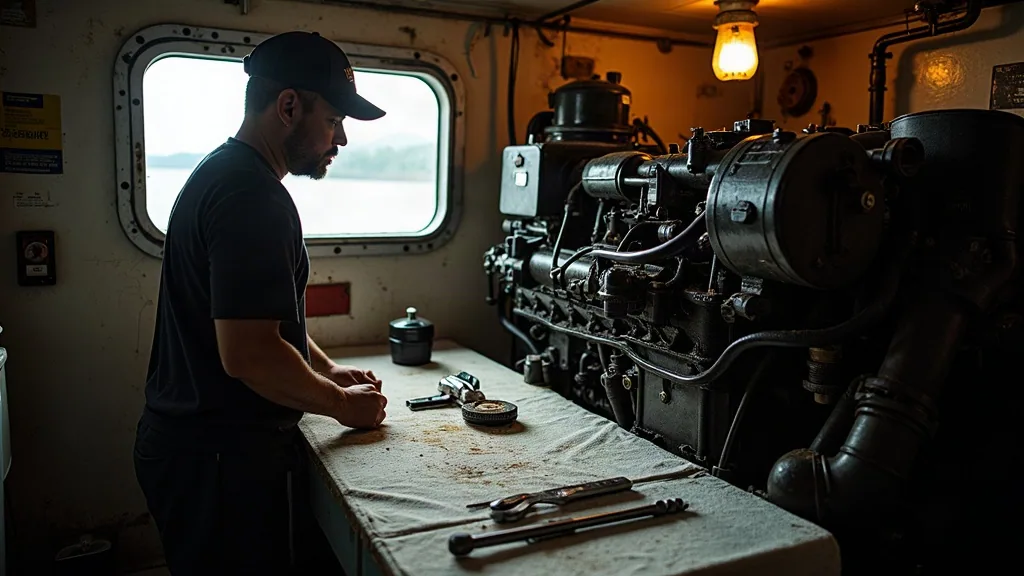
Engine and running-gear work for the Raja Ampat fleet is done alongside at anchorages in the
islands where the job allows it, and on the hard in Sorong where it does not. Shaft withdrawal, propeller repair,
stern-gland renewal and rudder bearing work all need the vessel dry; injector, pump, cooling, gearbox and control-system work
usually does not.
Propulsion
- Diagnosis before disassembly. Compression and blow-by, exhaust temperatures across cylinders, fuel and
lube analysis where it is available, load response on trial, and vibration and alignment checks. Half of the “engine overhaul”
enquiries we receive turn out to be fuel contamination, a fouled cooler, a failing coupling or a bent shaft. - Top-end and full overhaul — cylinder head service, valve and seat work, injector servicing and calibration,
liner, piston and ring renewal, bearing renewal, and reassembly to manufacturer torque and clearance figures which go in the
job file. - Cooling systems — heat exchanger and oil-cooler cleaning and pressure testing, raw-water pump and impeller
renewal, sea-strainer and sea-valve overhaul, and keel-cooler inspection where fitted. In this region cooling is the single most
common cause of an aborted trip. - Fuel systems — tank cleaning and polishing, filtration upgrades, injection pump service, and the fuel
housekeeping discipline that stops the same failure recurring three months later. Fuel quality across the eastern islands is
variable and filtration is not optional. - Auxiliaries — generators, bilge and fire pumps, watermakers, hydraulic power packs and windlasses, all of
which strand a liveaboard just as effectively as a main engine.
Running gear
Once the vessel is on the slipway or dock, the below-waterline
mechanical scope opens up:
- Shaft withdrawal, straightness and wear measurement, taper and keyway inspection
- Cutless bearing renewal, stern-tube and stern-gland service, dripless seal renewal
- Propeller removal, pitch and balance assessment, repair or replacement, and rope-cutter fitting
- Coupling faces and shaft alignment, checked cold and then confirmed after the vessel has been afloat and loaded
- Rudder stock, bearing clearances, quadrant and tiller-arm inspection, and steering-gear service
- Bow-thruster tunnel, gearleg and seal service
Alignment is worth a sentence on its own. A vessel aligned on the hard and never rechecked afloat will chew cutless bearings
and stern seals for years, and the owner will keep paying for the symptom. We take the final alignment readings with the hull in
the water and the tanks in a representative condition.
Where the work is done
Anything that can be reached from inside the vessel — heads, injectors, pumps, coolers, gearbox service, controls, generator
work — can be done at an island anchorage in Raja Ampat with a travelling team, which keeps a charter vessel earning. Anything
below the waterline, and any job needing heavy lifting or machining, is scheduled into a Sorong docking. Where machining exceeds
local capability — crankshaft grinding, large propeller reconditioning, specialist balancing — components are sent to Surabaya
or Bali and the lead time is quoted honestly up front rather than discovered mid-docking. Breakdown response is described under
emergency and on-site repair.
Spares, and the honest constraint
The binding constraint on machinery work in West Papua is not skill, it is parts. Sorong is at the end of a long supply
chain. Common consumables and filtration are held locally or in Makassar and Surabaya; genuine OEM components for European and
Japanese marine engines typically arrive from Jakarta or Singapore. That is why we ask for engine and gearbox model and serial
numbers at enquiry stage — so that the parts are moving while the vessel is still in transit, instead of after it is on the
cradle. Operators running a fixed seasonal programme are far better off holding a critical-spares list on board; we will help
build one as part of a managed maintenance plan.
Documentation
Every machinery job closes with the measured figures — clearances, torques, alignment readings, pressure-test results — plus
parts used and photographs of anything that will be inaccessible after reassembly. Class-related machinery items are coordinated
through the survey desk so that the surveyor sees the
component open rather than taking your word for it after the fact.
Tenders, outboards and the small-boat fleet
A dive liveaboard is only as good as her tenders, and a dead outboard strands a dive programme as surely as a dead main engine. We service and repair the support fleet — outboards, tender inboards, jet units on the newer boats — in Sorong or during field visits, with the same triage logic: identify from photographs and serial numbers first, travel with the parts second. Common failure points on hard-worked charter outboards are predictable enough that a small spares kit, staged through the parts logistics channel, keeps most of them running through a season.
Vibration felt through the hull rather than the engine mounts usually belongs to the shaft line, not the engine — the diagnostic split, and what divers can check without a haul-out, is covered under propeller, shaft and stern gear repair. It is worth reading before you budget for an engine fault you may not have.
Talk to the repair desk
Send the vessel particulars — length overall, beam, draft, hull material, displacement, current location and the window you have available — and the Raja Ampat Shipyard Desk will come back with a written scope and a quotation in USD for engine, gearbox and running-gear work. Quotations name the yard, the slipway or dock, the work sequence and the assumptions behind every line.
WhatsApp: +6281139414563
Email: bd@juaraholding.com
Contracts for construction, repair, refit and vessel-sale work are issued by PT Komodo Galangan Nusantara. All quotations are stated in USD.
Further reading from the field notes
- Fuel System Troubleshooting: Water, Diesel Bug & Blocked Filters
- Checklist Perawatan Tahunan Kapal Wisata di Raja Ampat dan Sorong
Frequently asked questions
Can engine work be done at anchor in Raja Ampat?
Yes for most internal work — injectors, heads, coolers, pumps, gearbox service, generators and controls can all be handled by a travelling team at an island anchorage. Shaft, propeller, stern-gland and rudder bearing work needs the vessel out of the water in Sorong.
How long does it take to get engine parts to Sorong?
Common consumables and filtration are usually days. Genuine OEM components for European or Japanese engines typically move from Jakarta or Singapore and should be planned in weeks, not days. Send engine and gearbox model and serial numbers at enquiry so ordering starts before the vessel arrives.
Do you check shaft alignment afloat or ashore?
Both. Preliminary alignment is set ashore, and the final readings are taken with the vessel afloat and tanks in a representative condition. Alignment signed off only on the hard is the reason many vessels keep consuming cutless bearings.
Can you do a full engine overhaul locally, including machining?
Assembly, measurement and most service work is done locally. Heavy machining such as crankshaft grinding or large propeller reconditioning is sent to Surabaya or Bali. We quote that lead time openly at scoping stage because it usually determines the length of the docking.